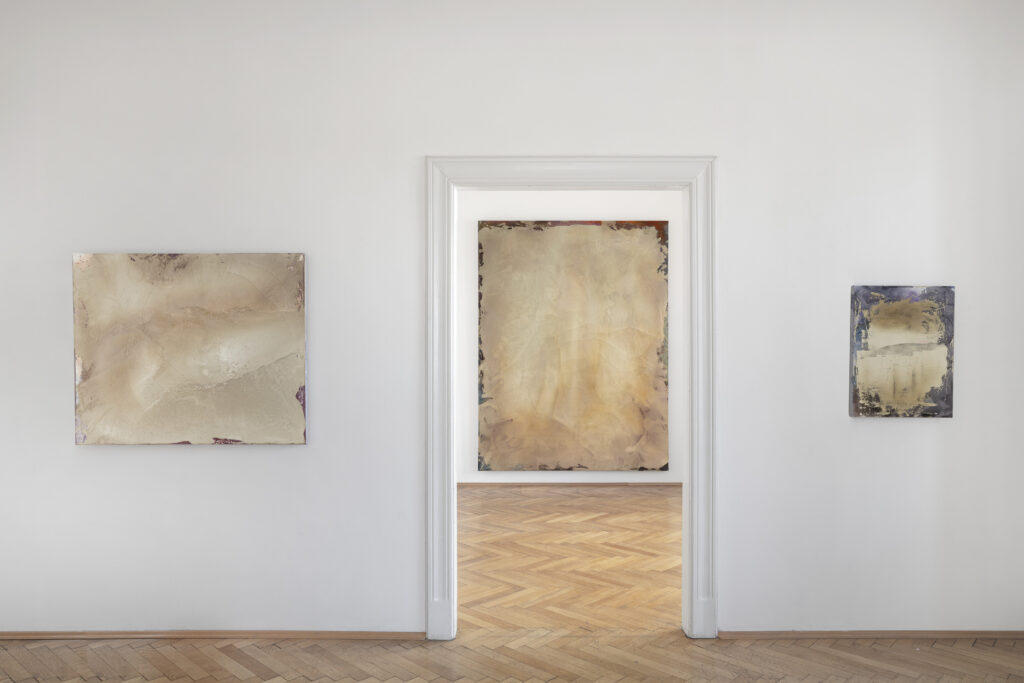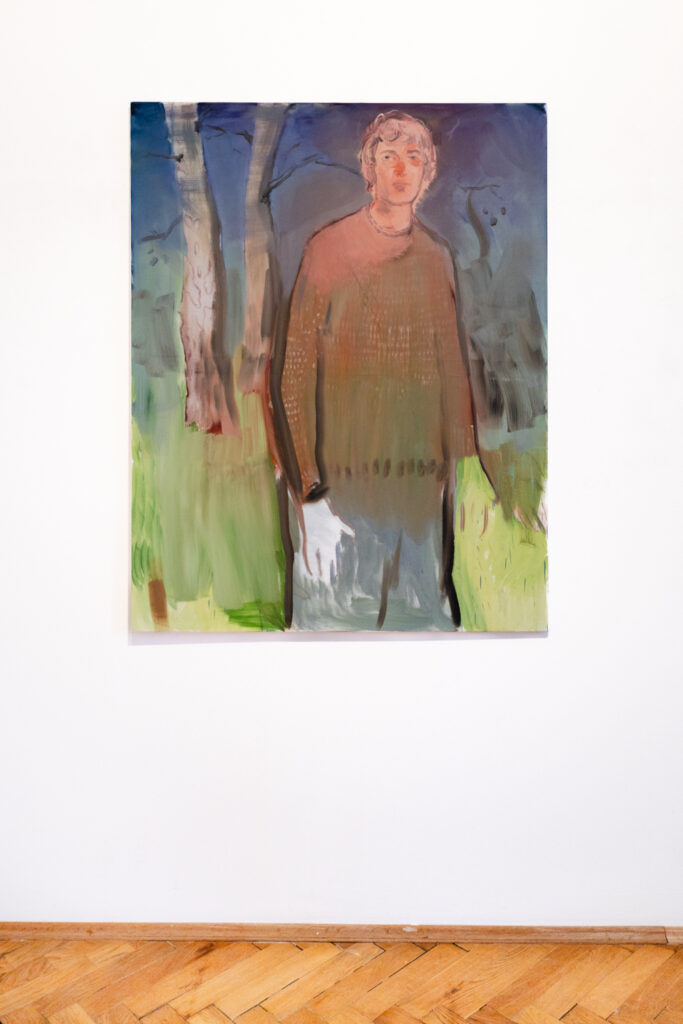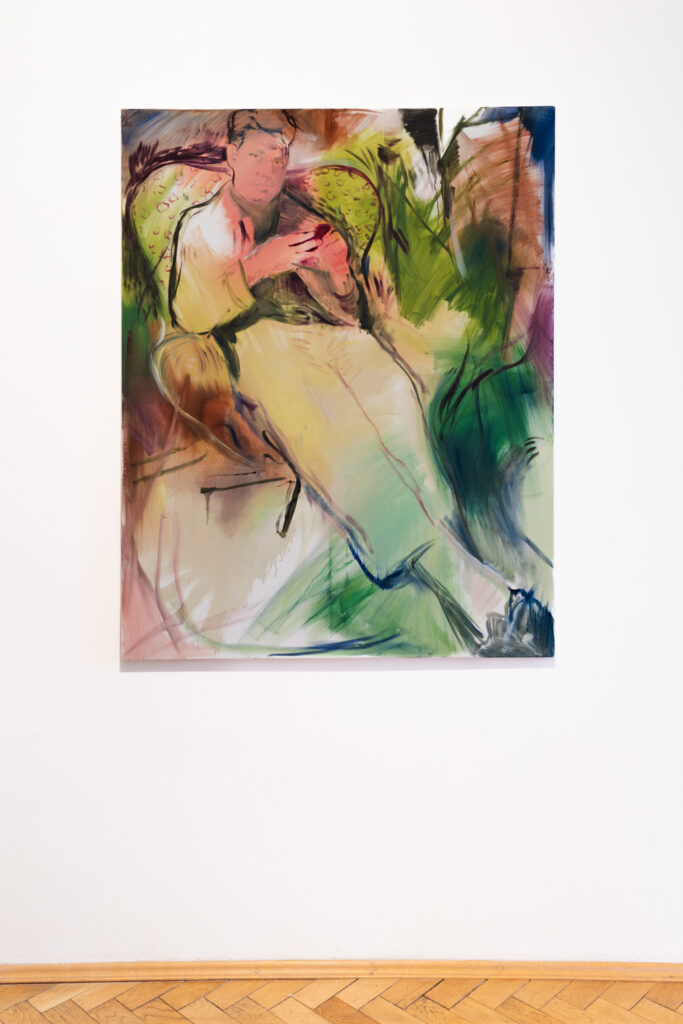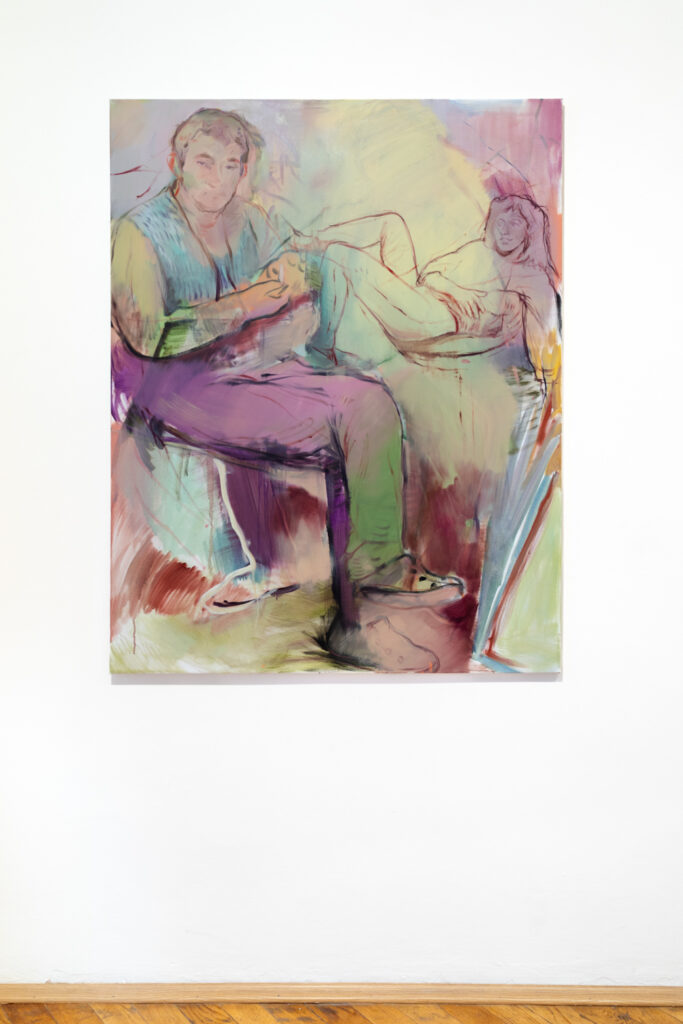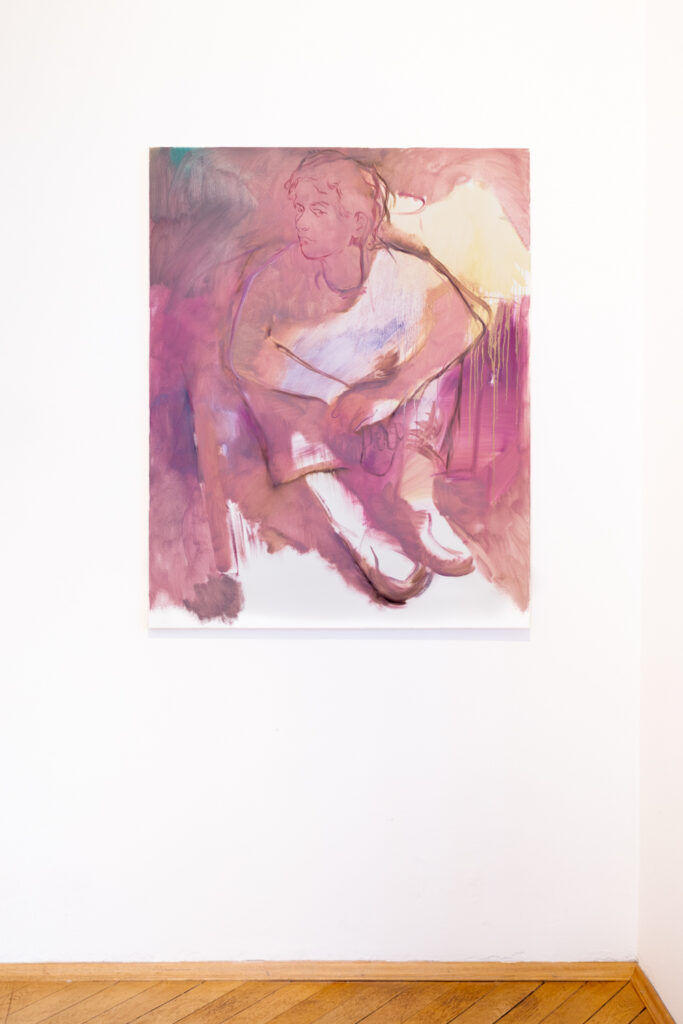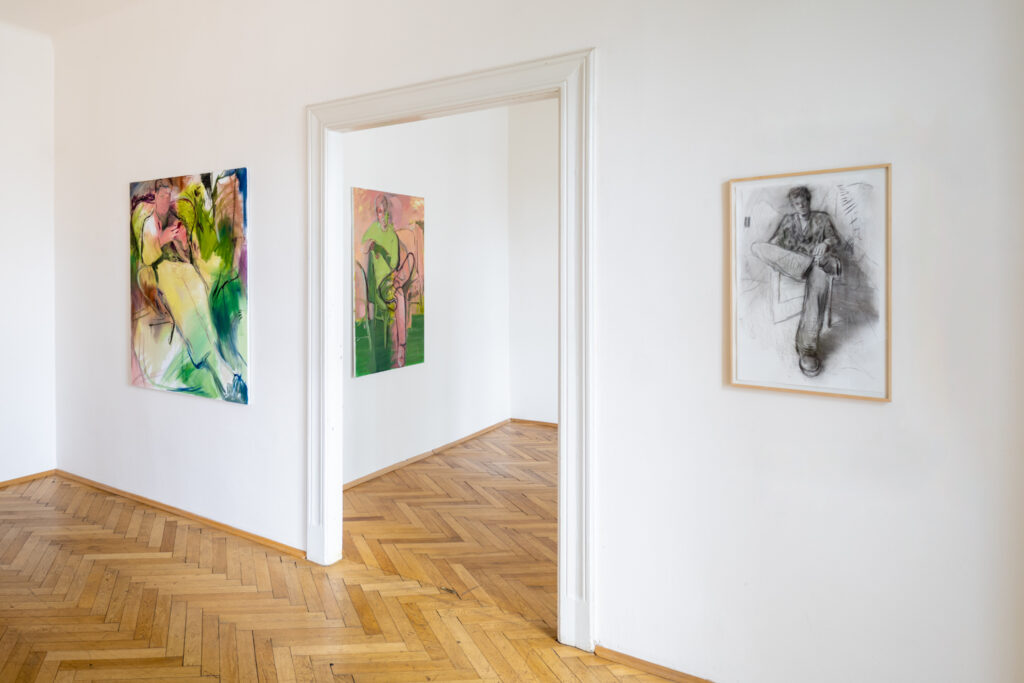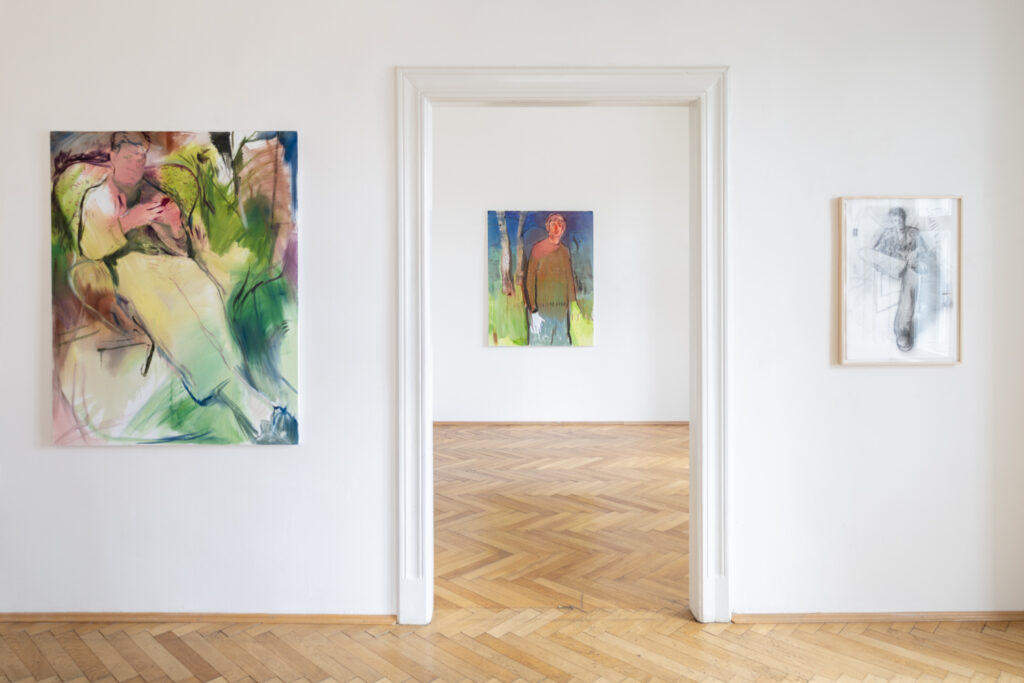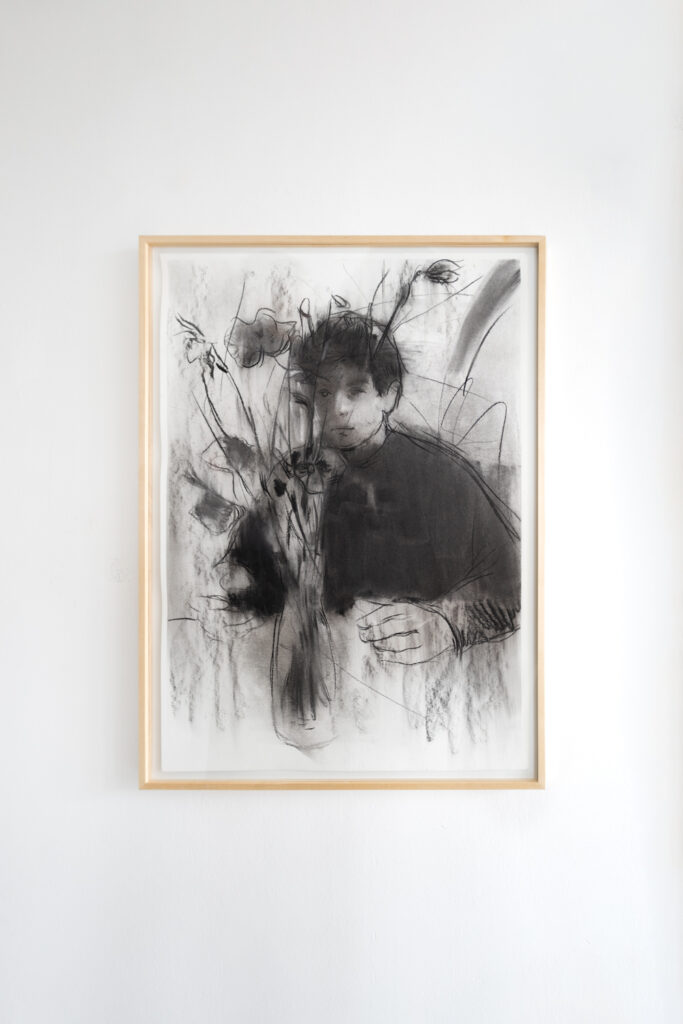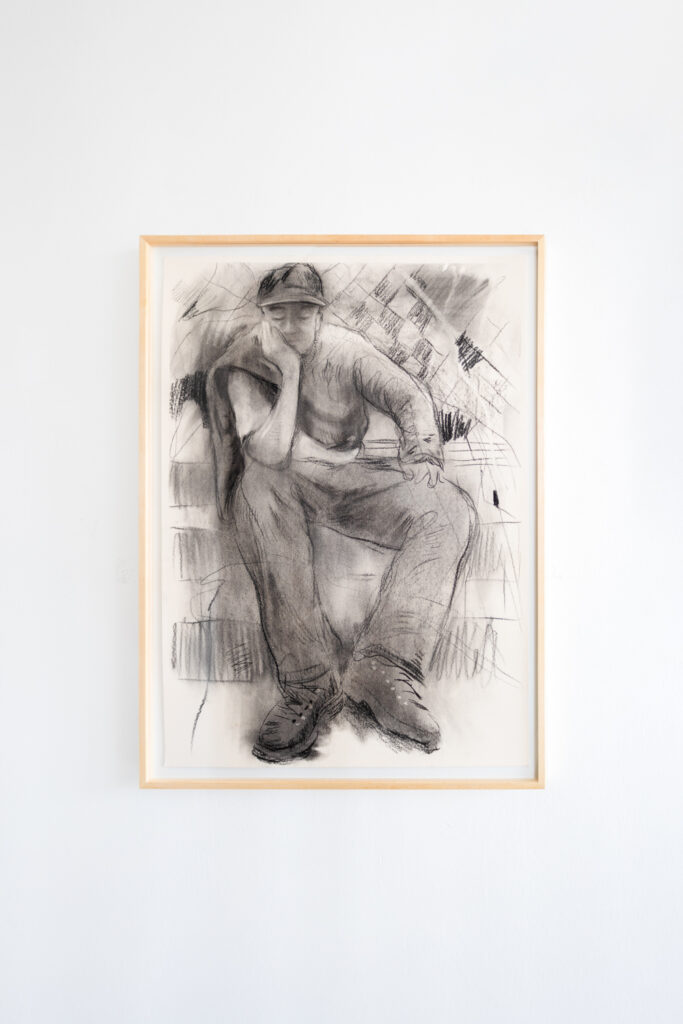
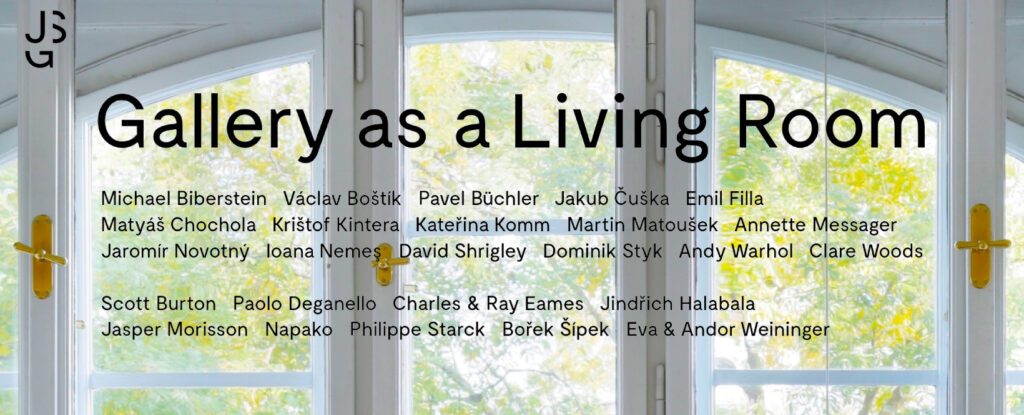
Gallery as a Living Room
Vernisáž: 22.9. 18:00
Vernisáž: 22.9. 18:00
22. 9. - 30. 10. 2026
Michael Biberstein, Václav Boštík, Pavel Büchler, Jakub Čuška, Emil Filla, Matyáš Chochola, Krištof Kintera, Kateřina Komm, Martin Matoušek, Annette Messager, Jaromír Novotný, Ioana Nemeş, David Shrigley, Dominik Styk, Andy Warhol, Clare Woods
Scott Burton, Paolo Deganello, Charles & Ray Eames, Jindřich Halabala, Jasper Morisson, Napako, Philippe Starck, Bořek Šípek, Eva & Andor Weininger
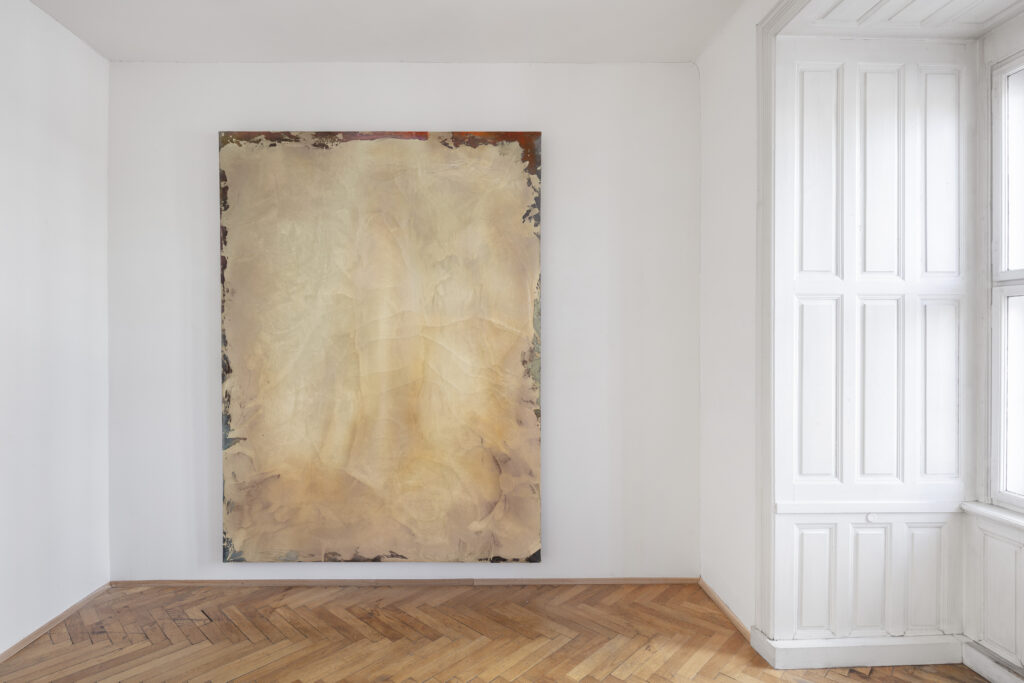
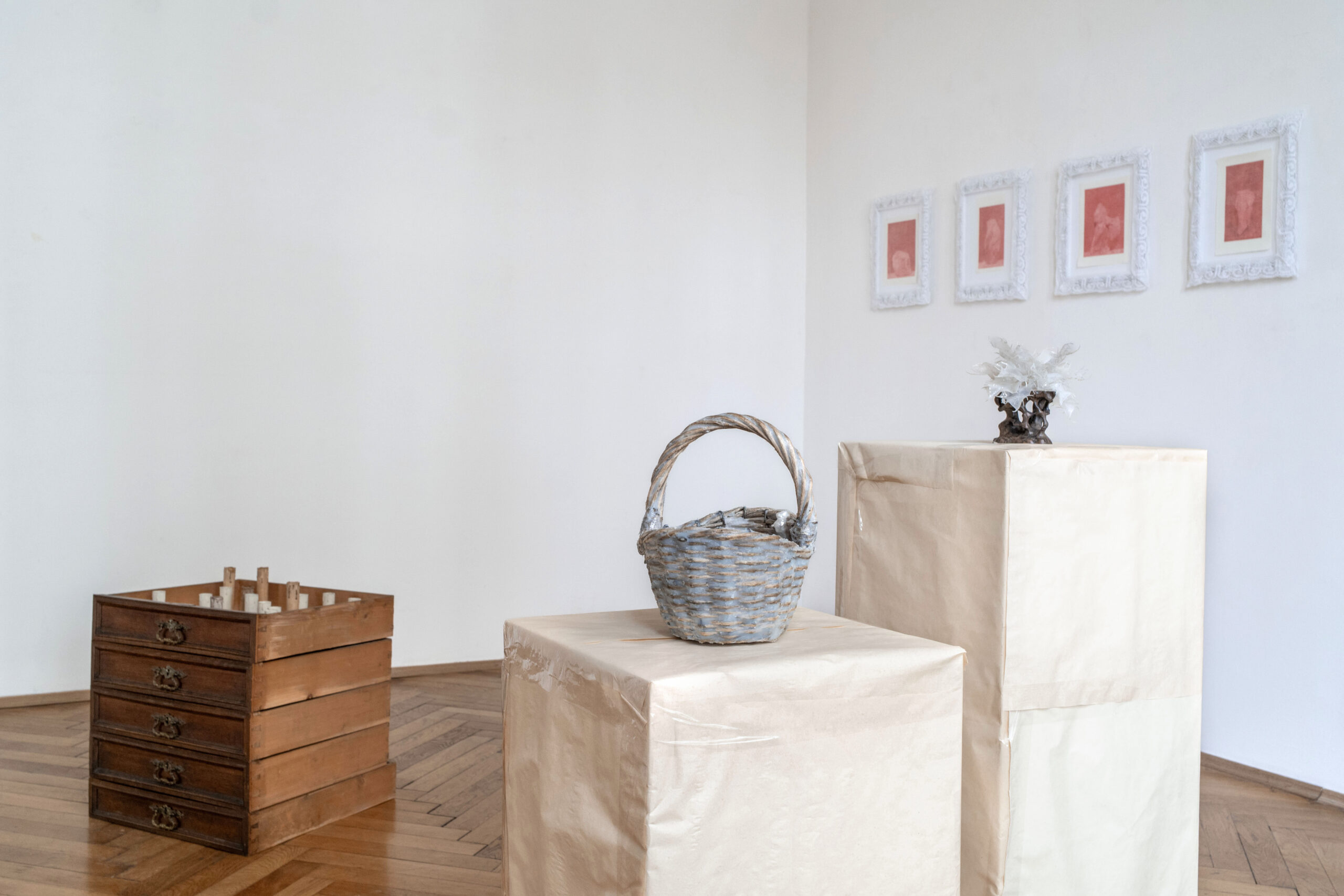
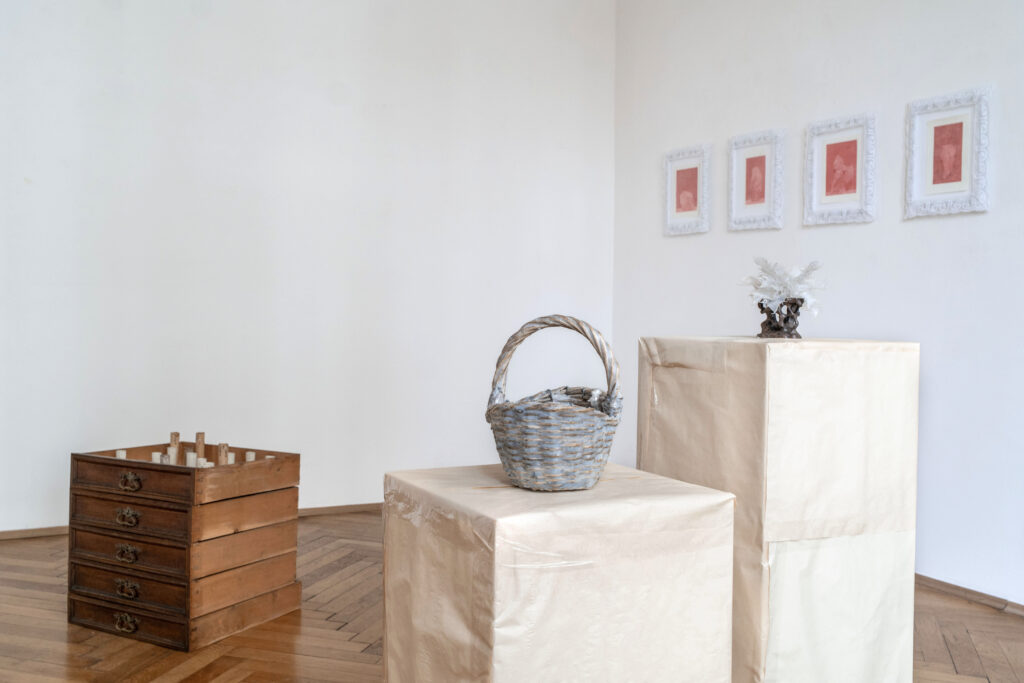
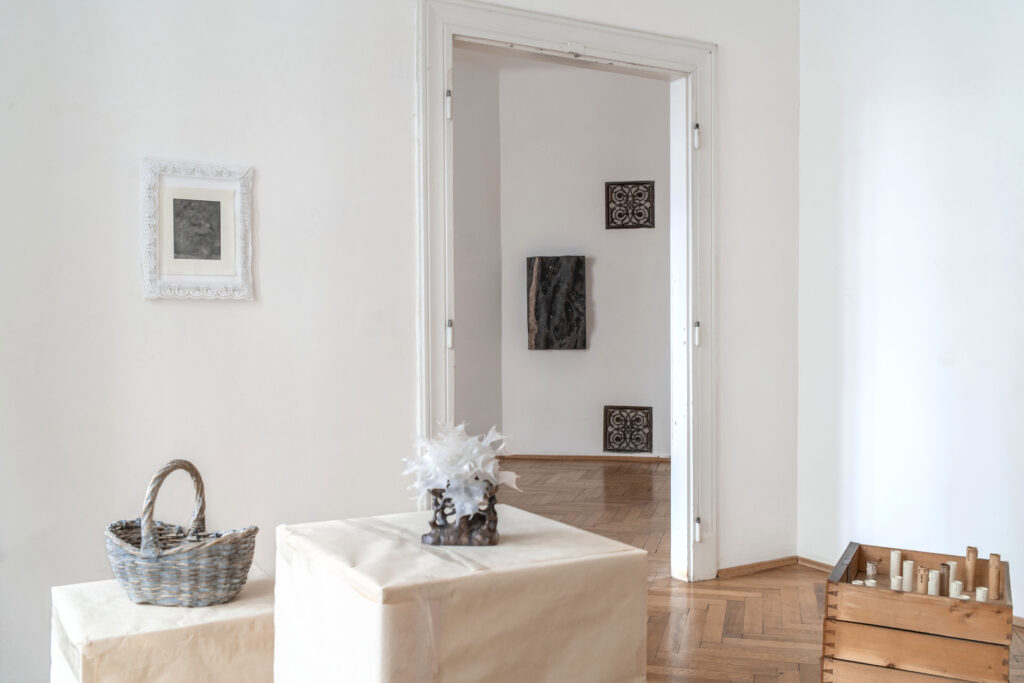
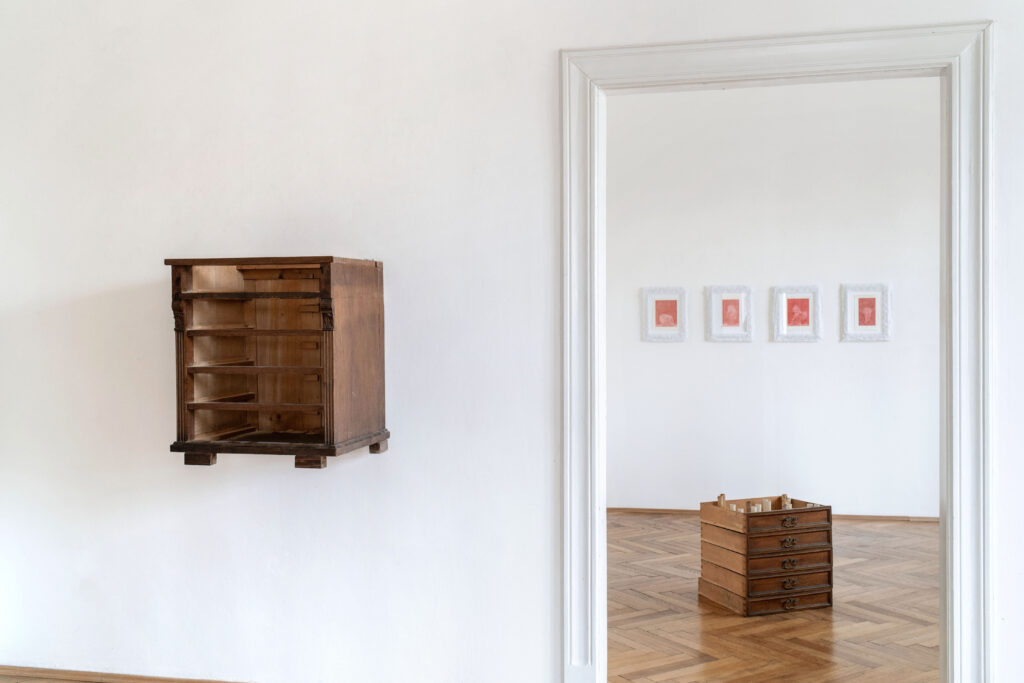
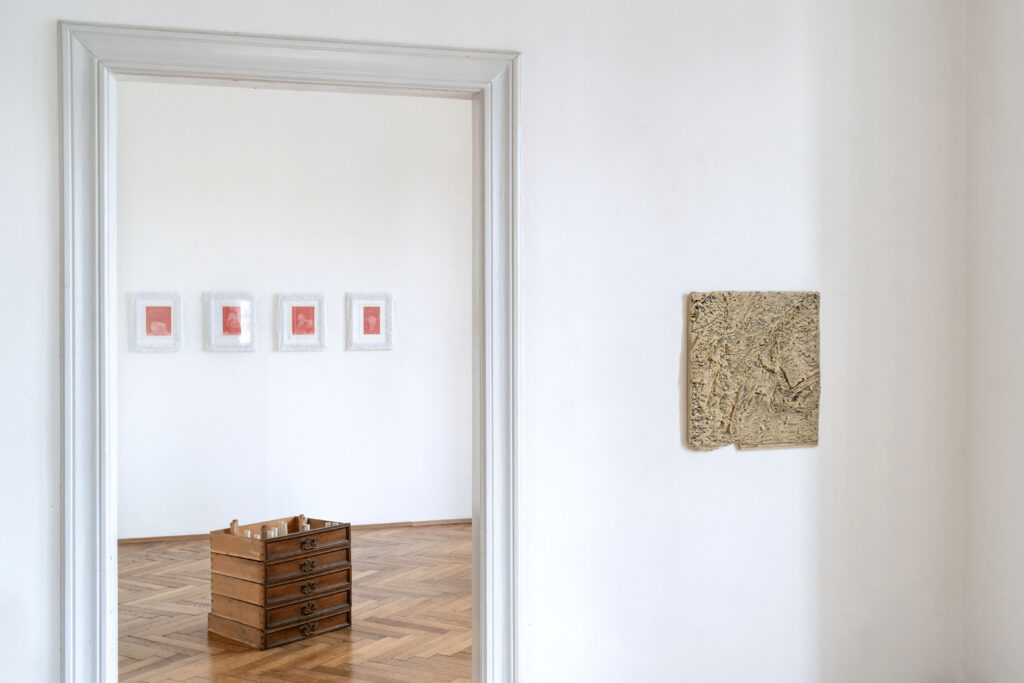
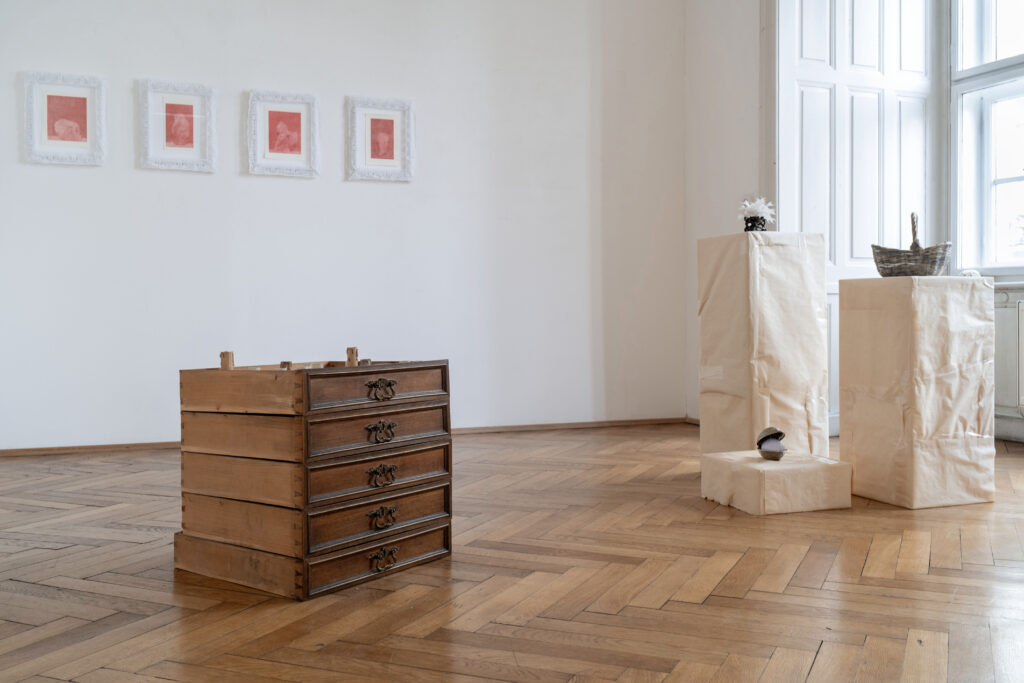
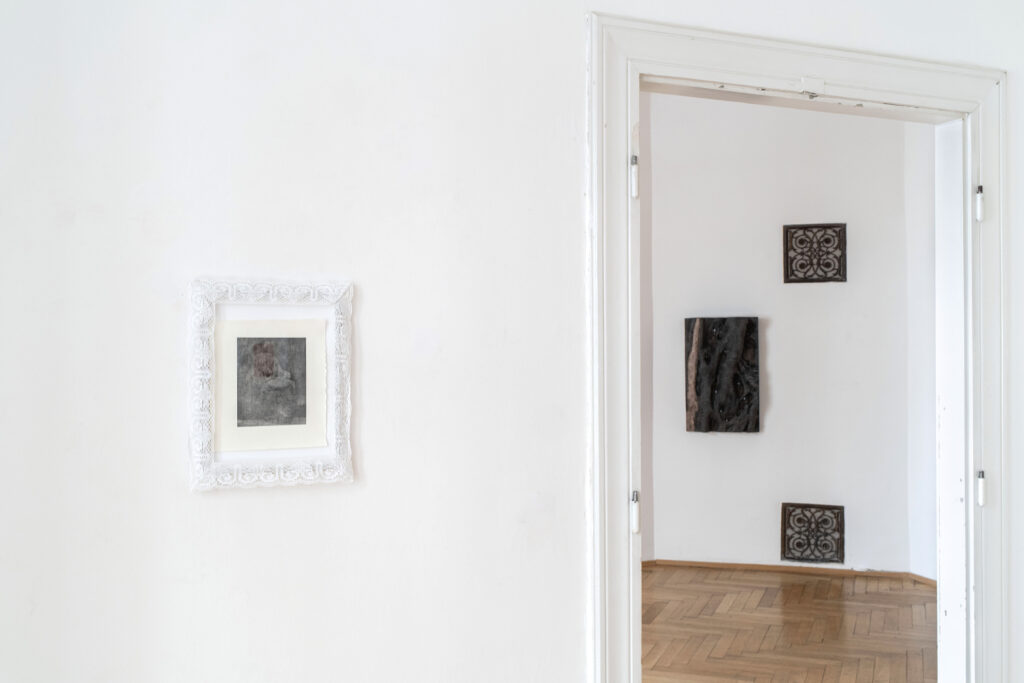
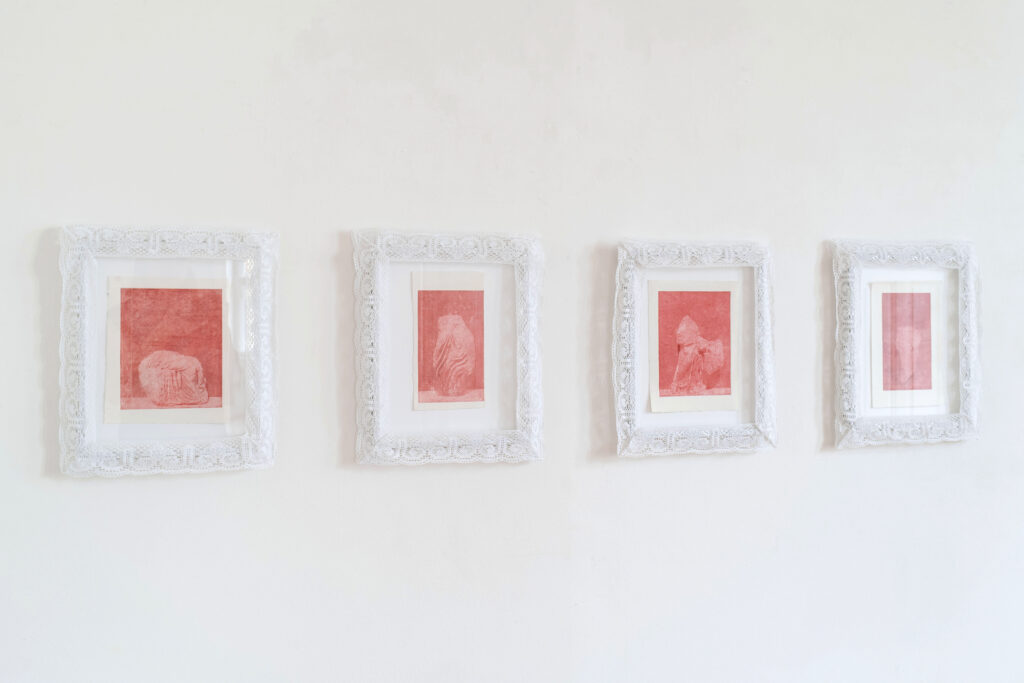
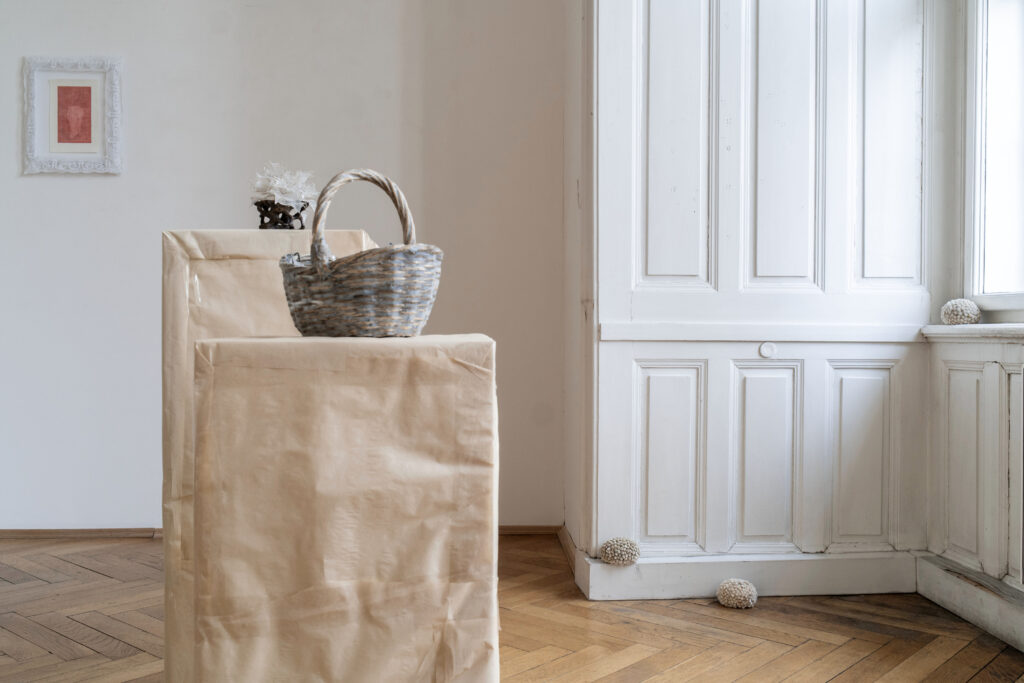
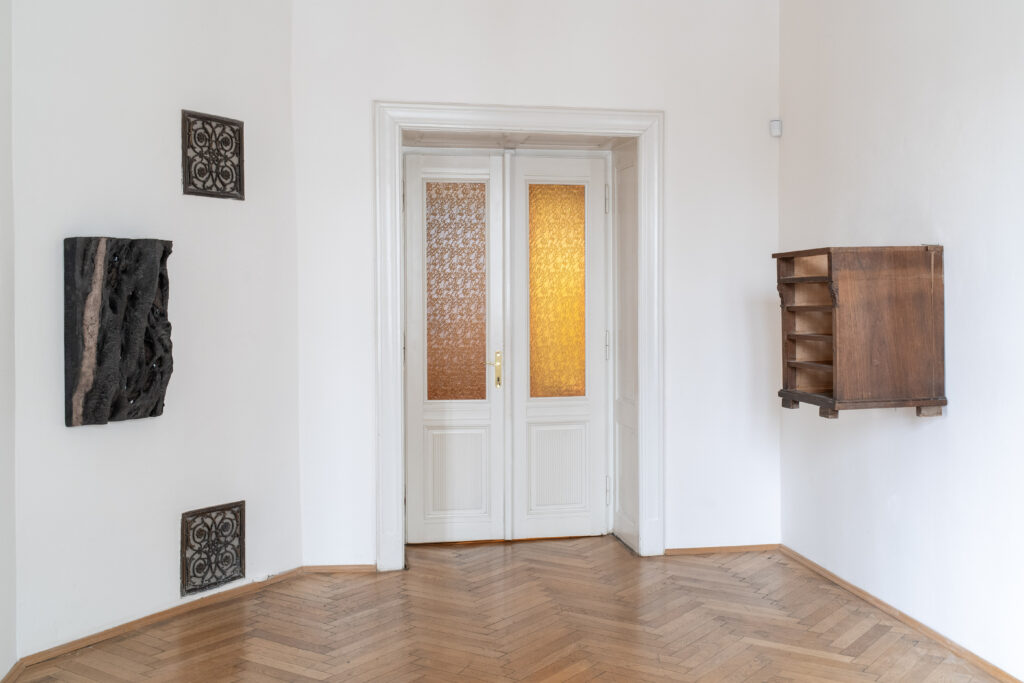
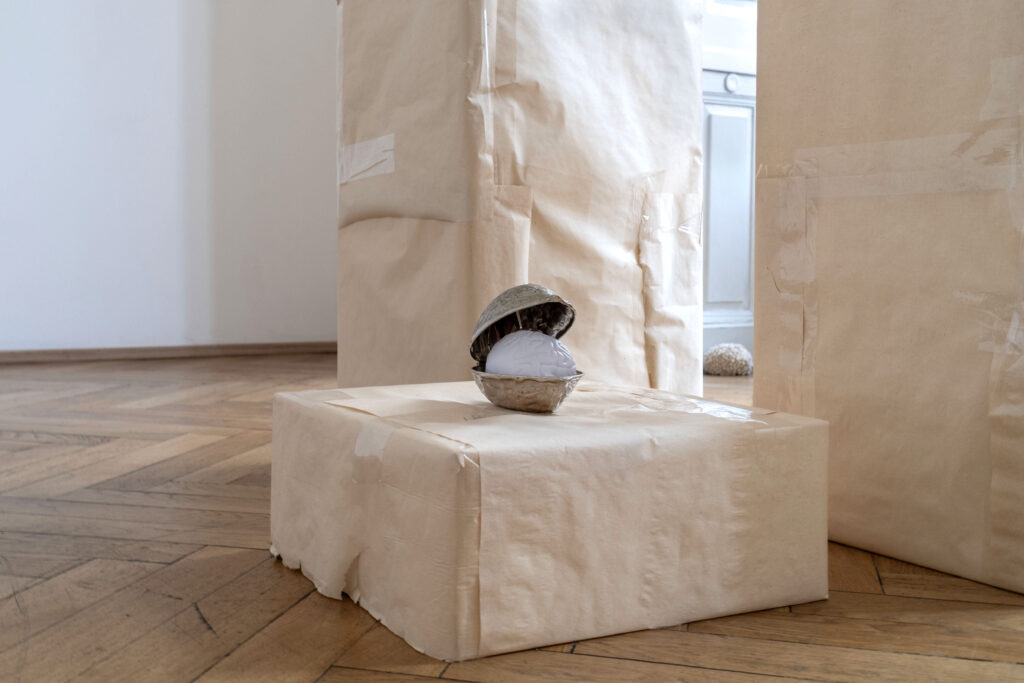
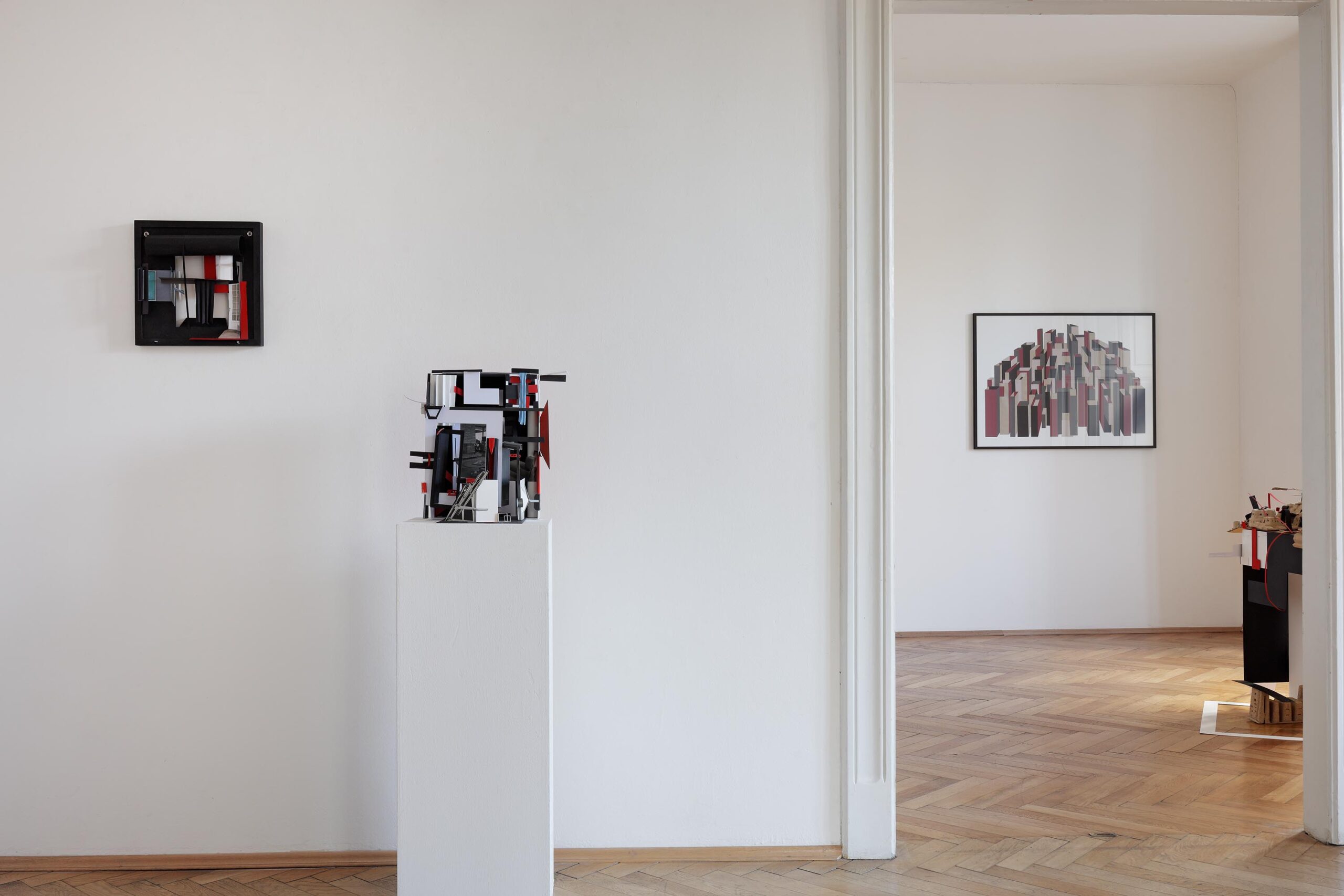
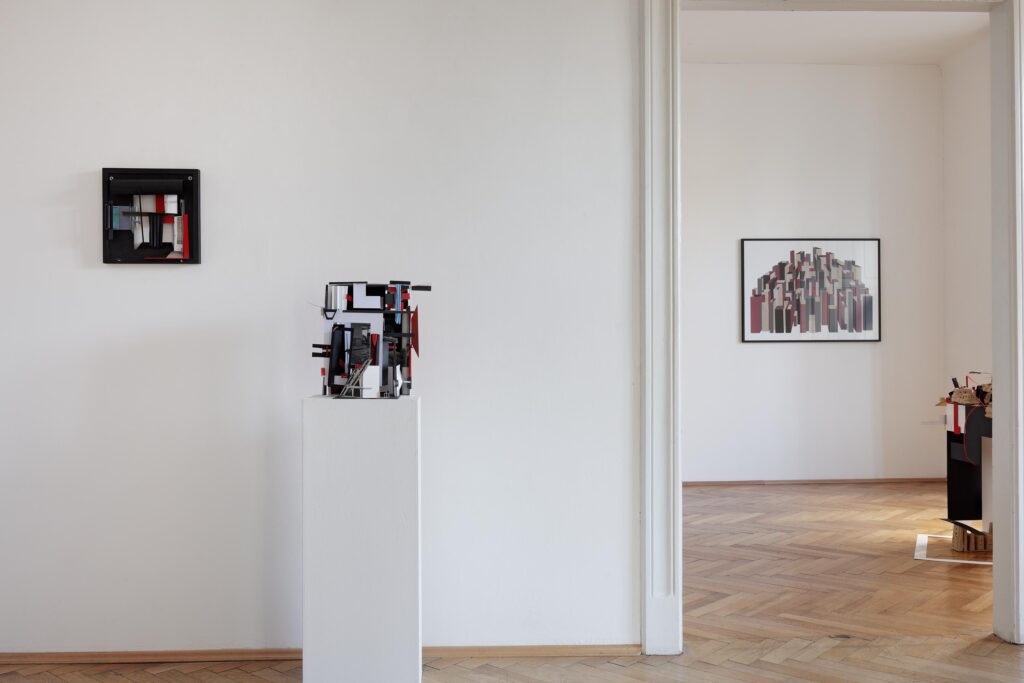
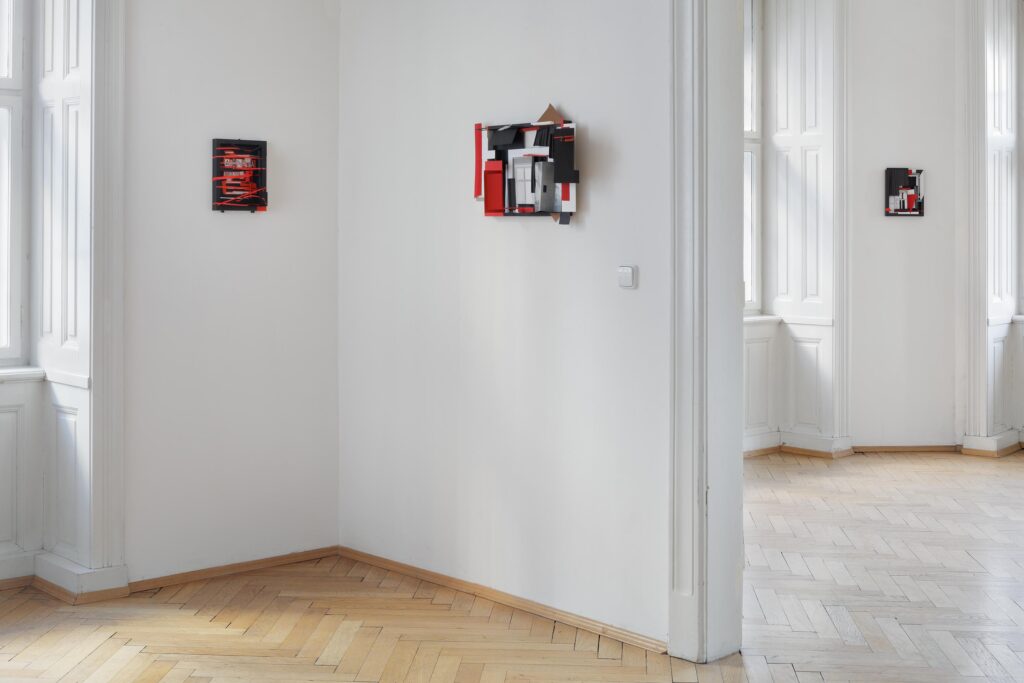
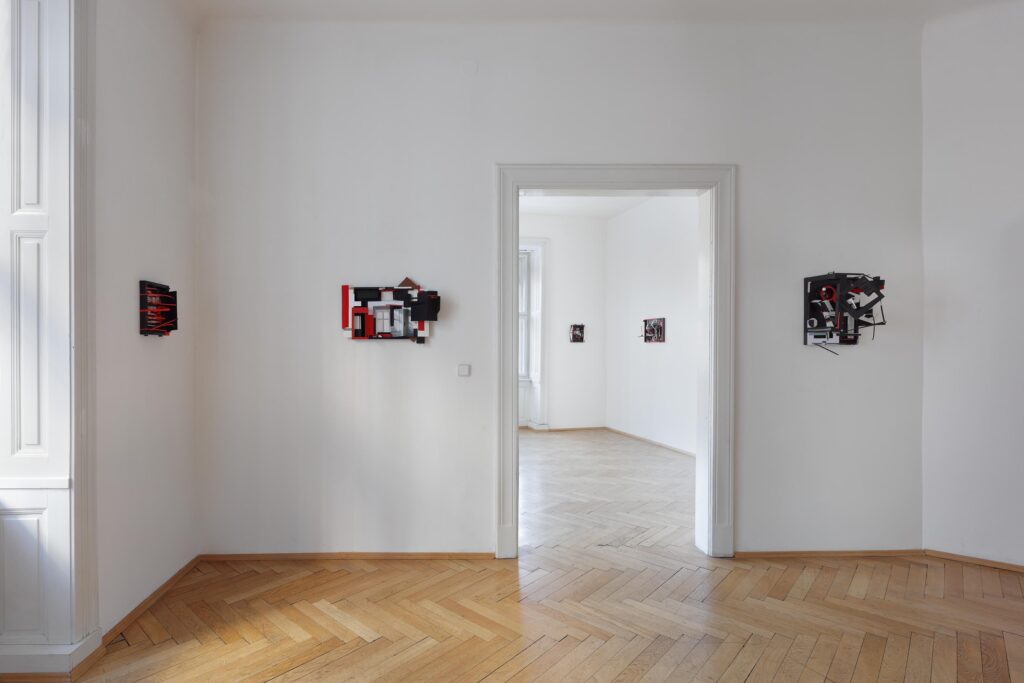
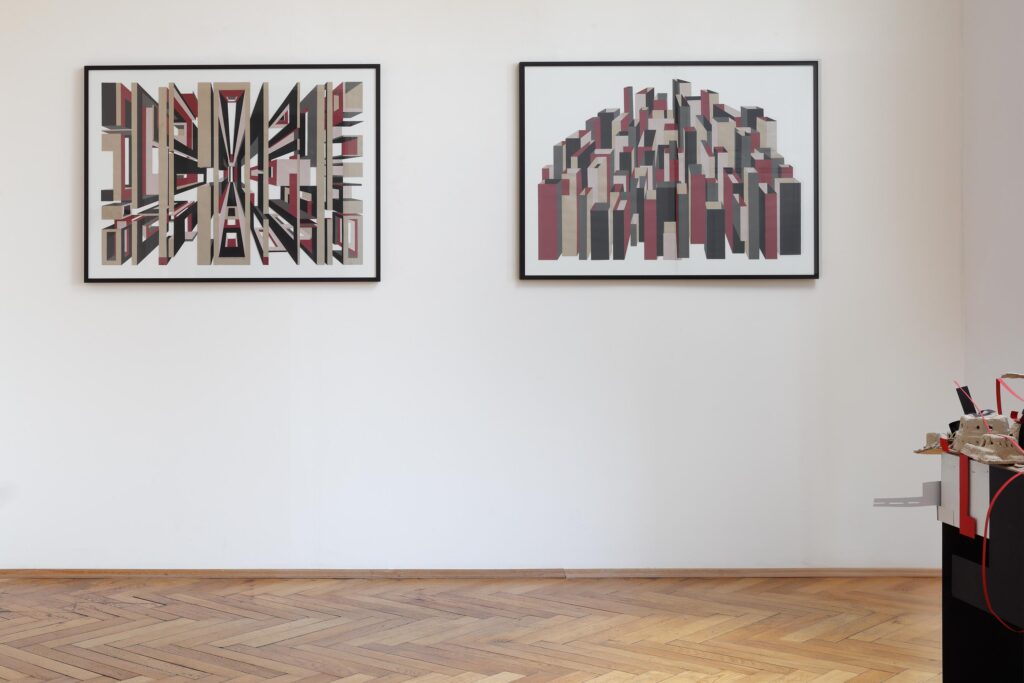
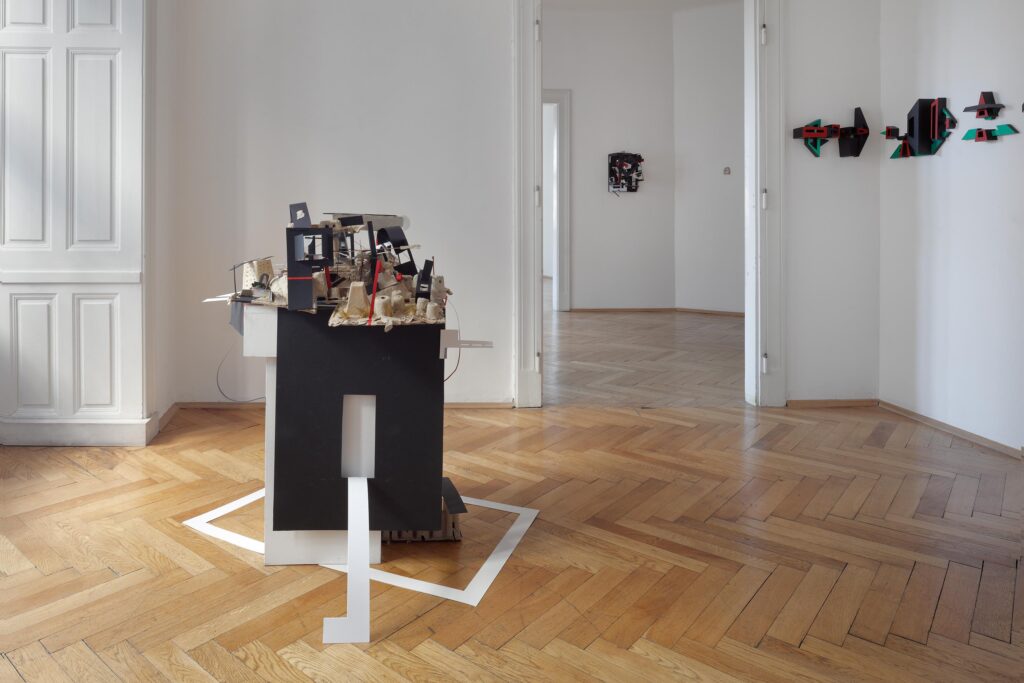
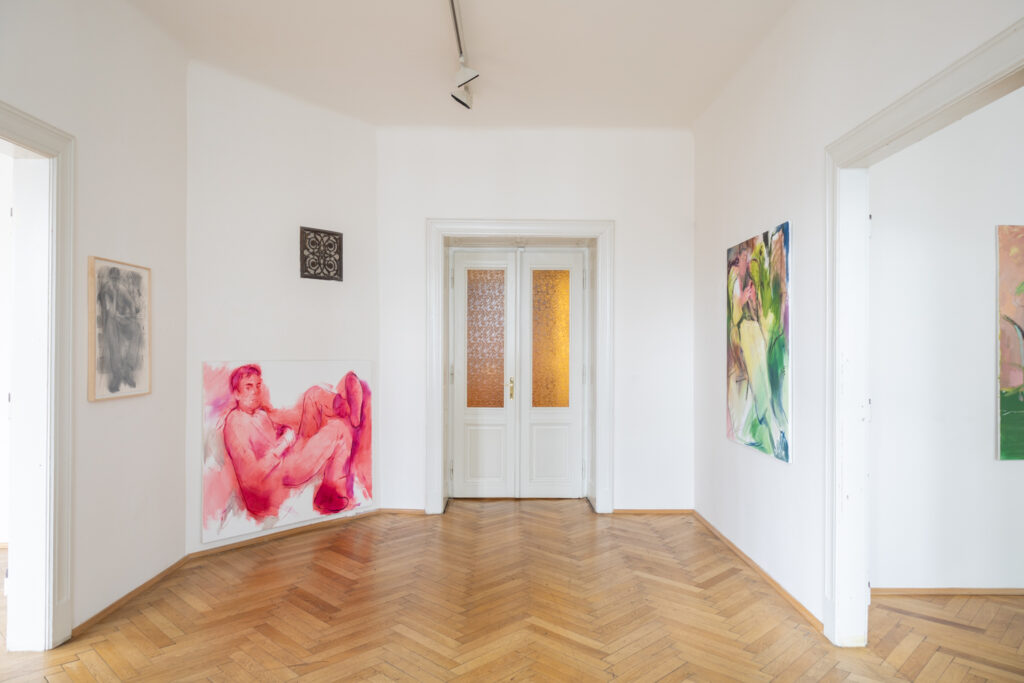
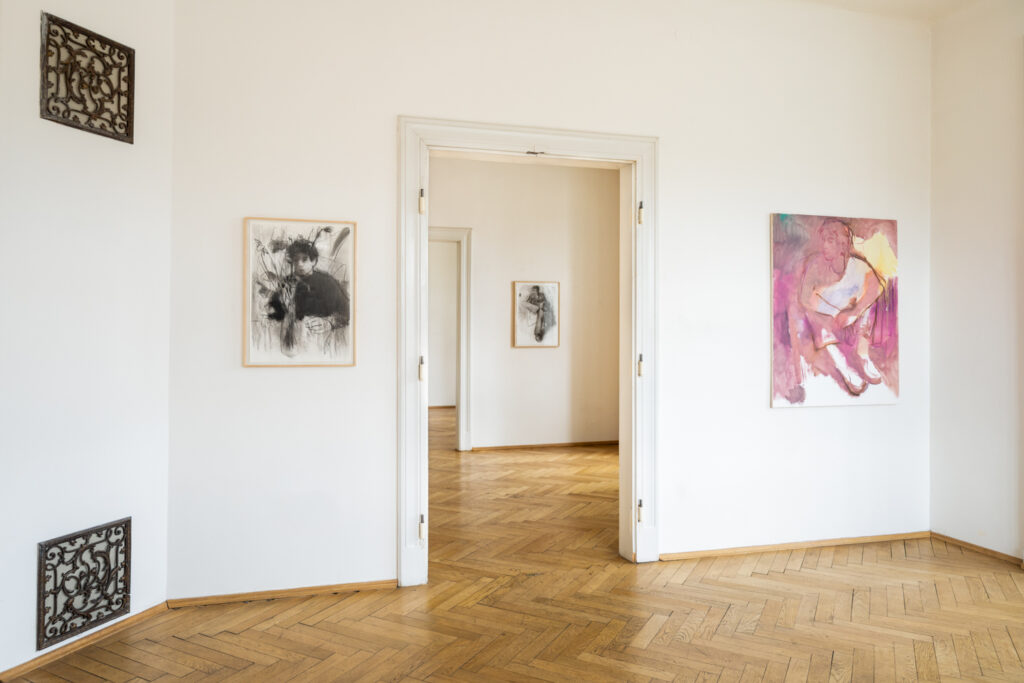
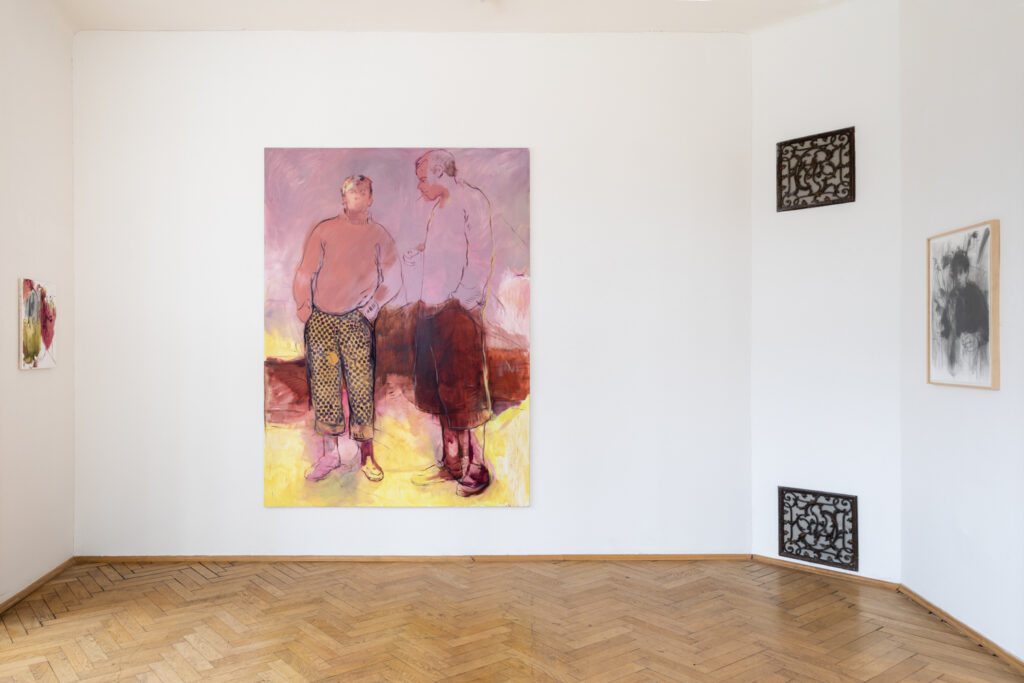
We would like to invite you to the opening of a new format of the gallery on Tuesday, September 22, at 6 p.m.: after thirty years of various activities, the white cube is becoming a living room and vice versa.
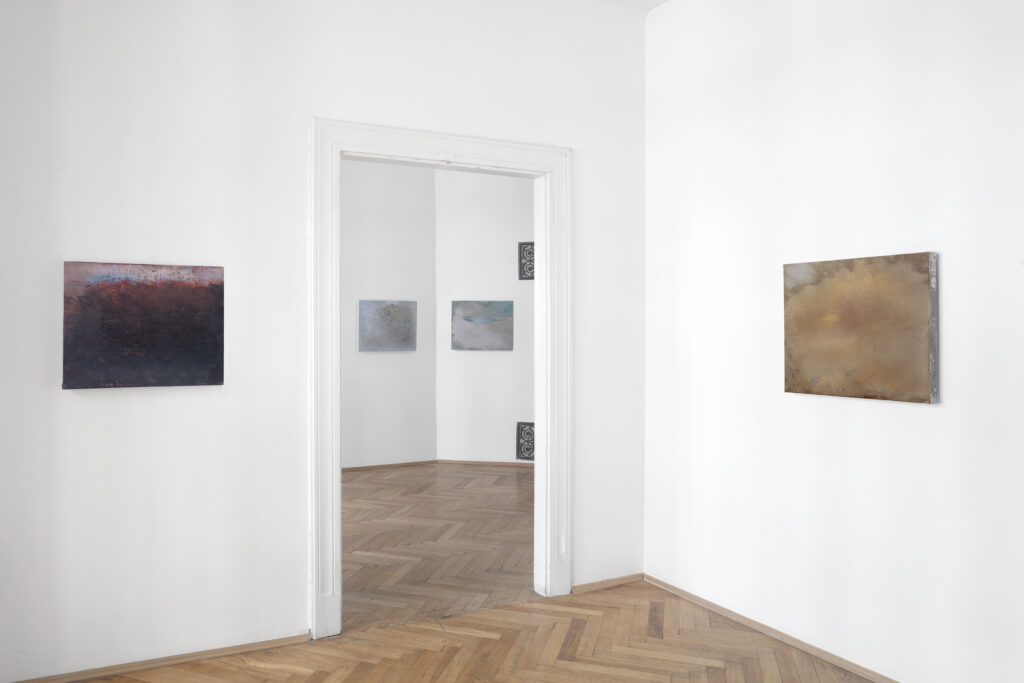
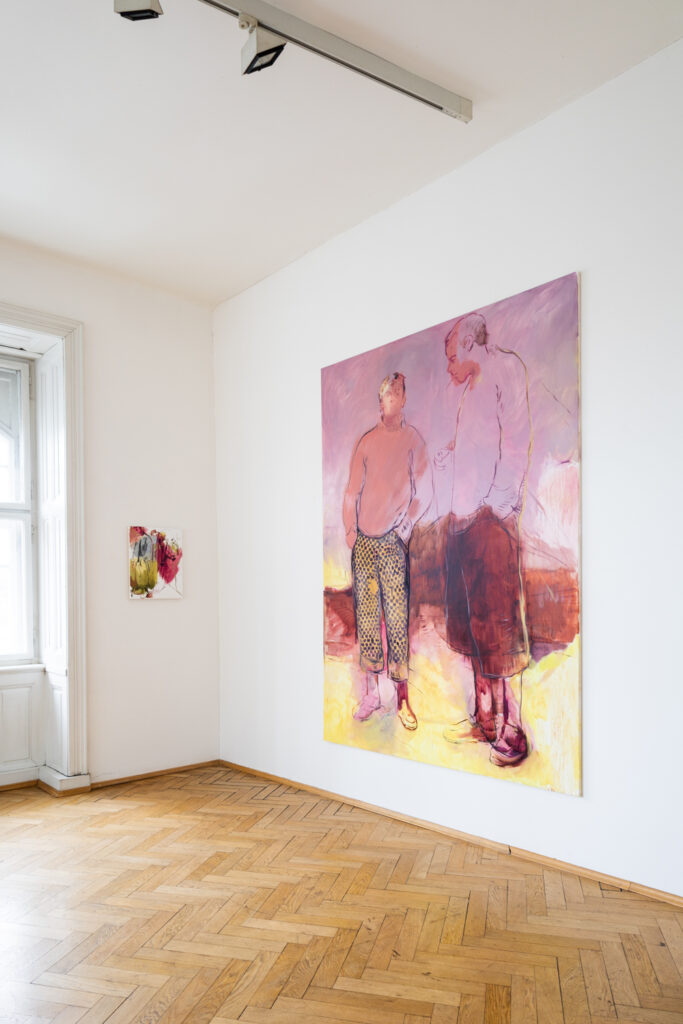
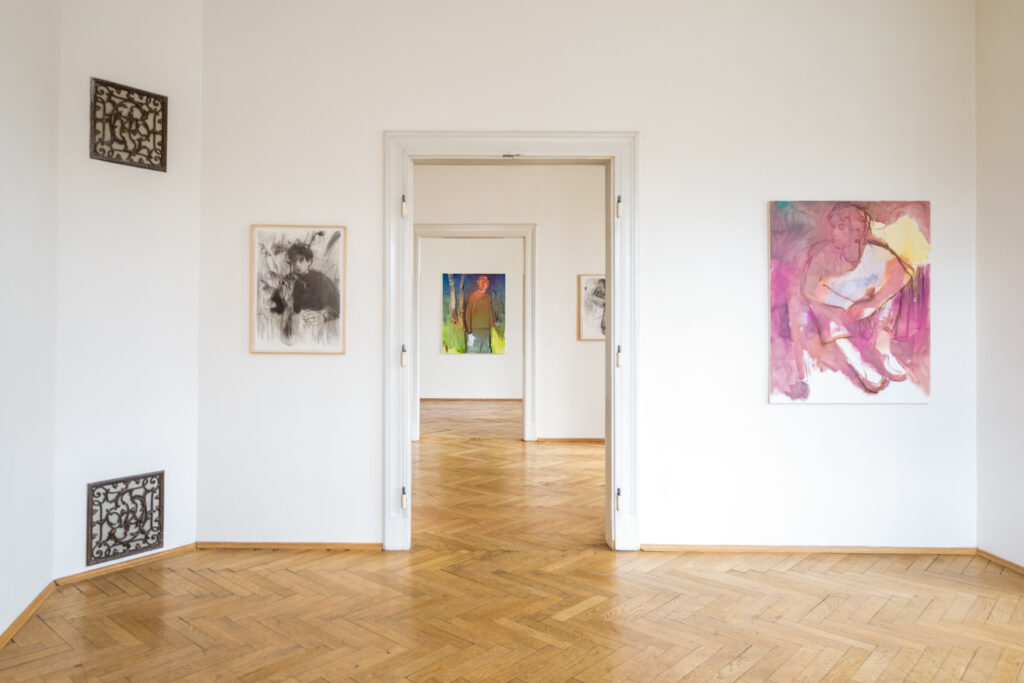
Instead of solo exhibitions, the newly reconfigured space will now feature a mix of works by artists with whom the gallery currently collaborates, as well as those whose work has been associated with it in the past, along with selected pieces from the secondary market.
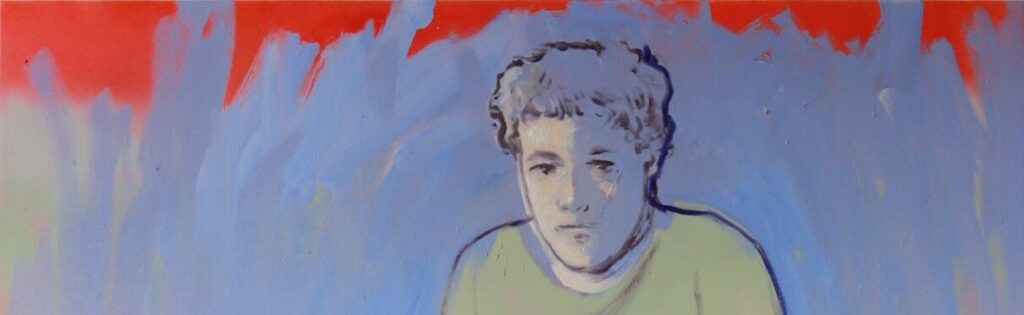
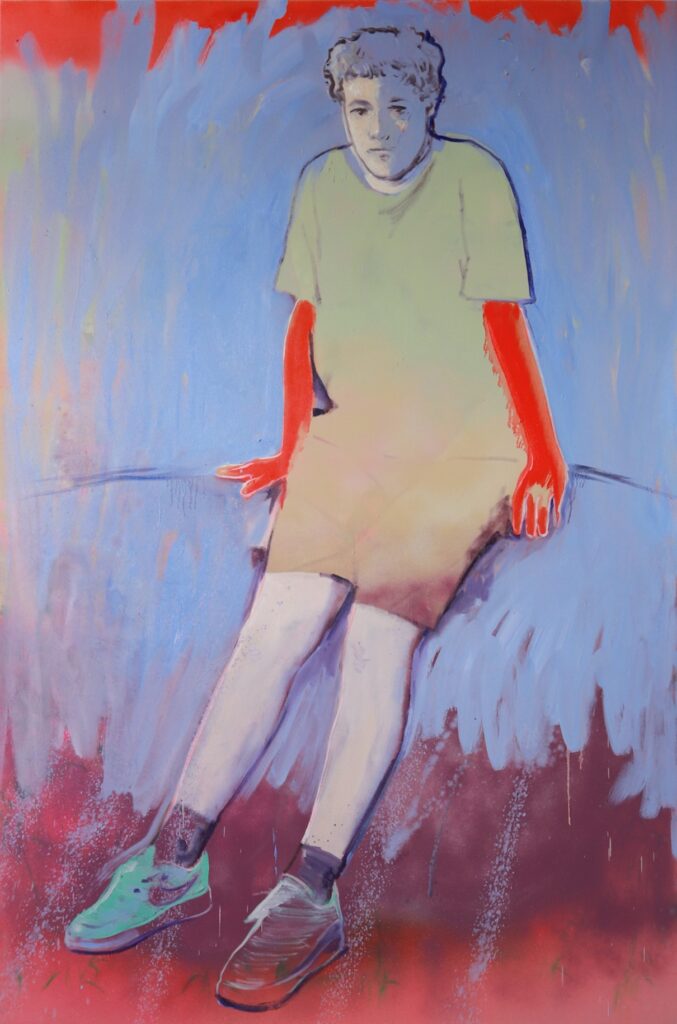
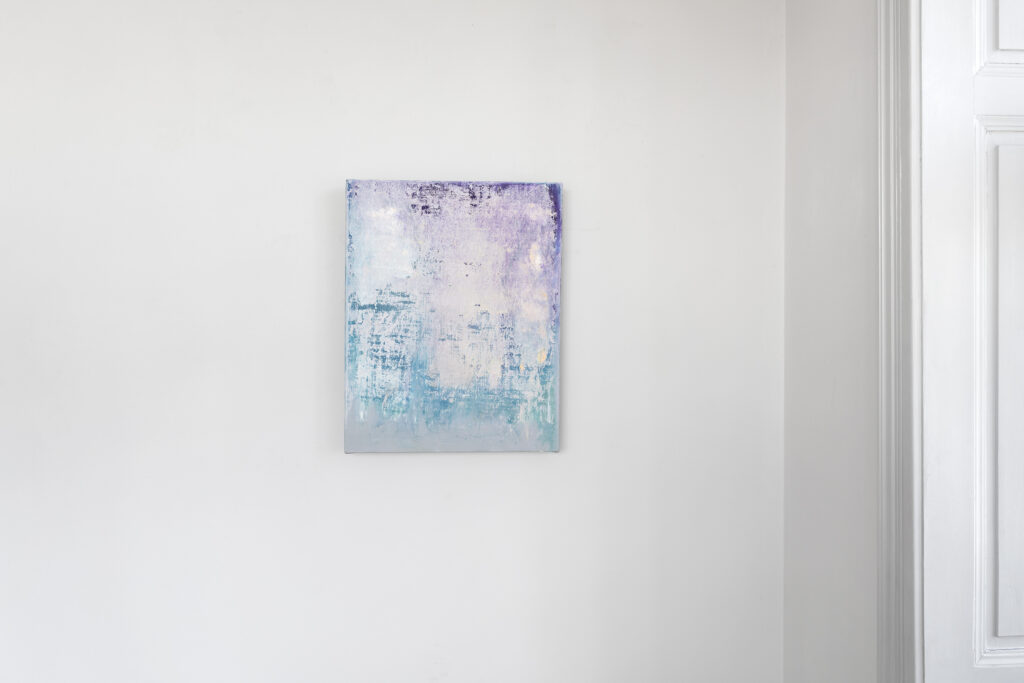
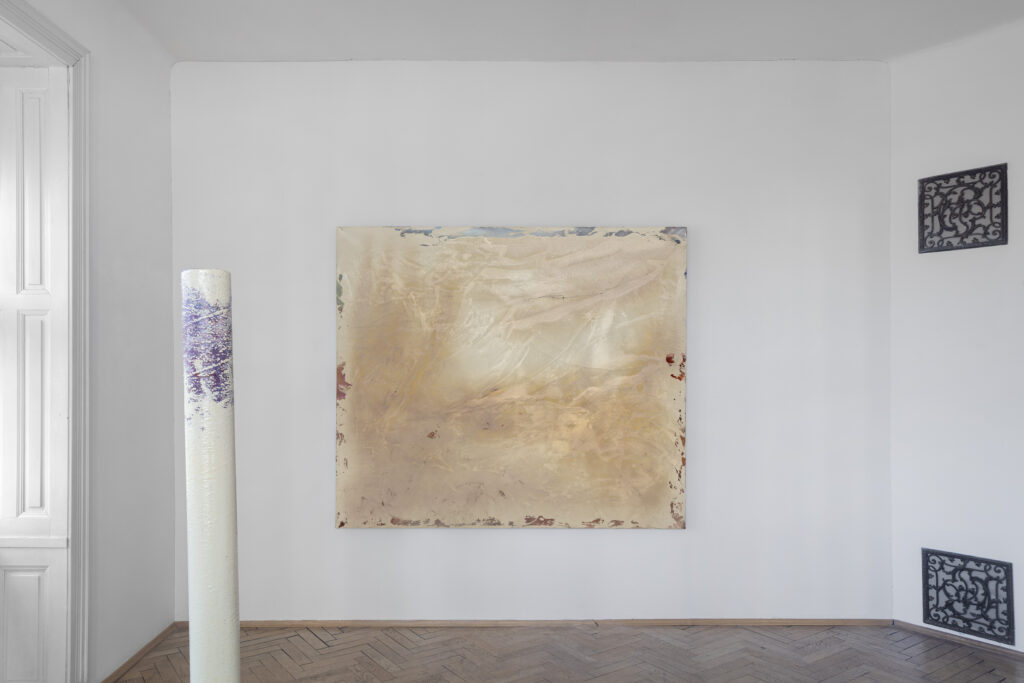
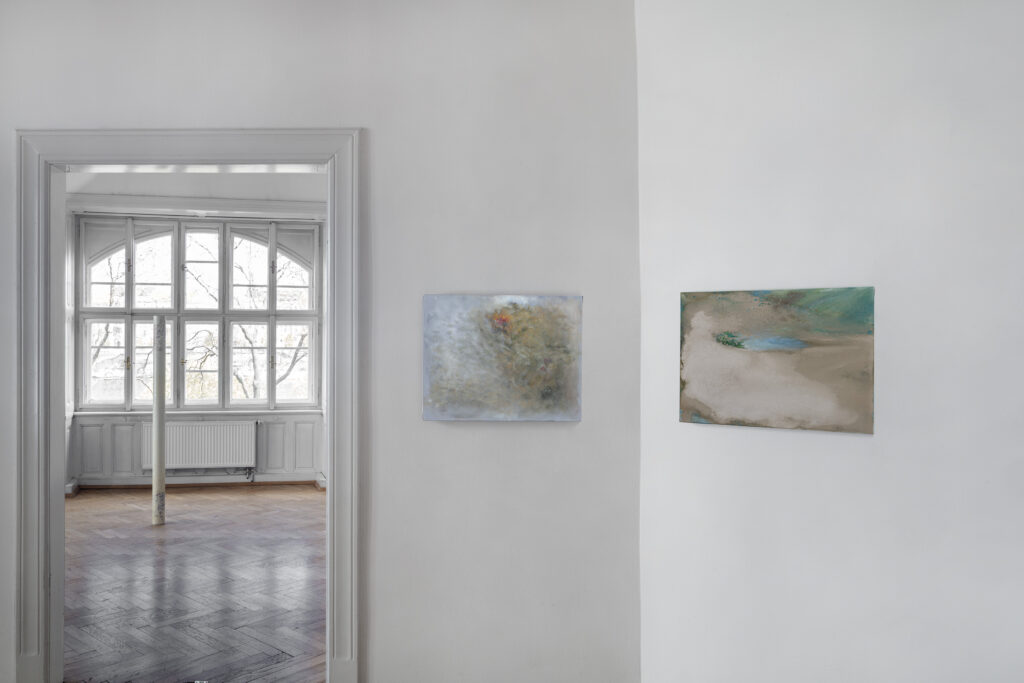
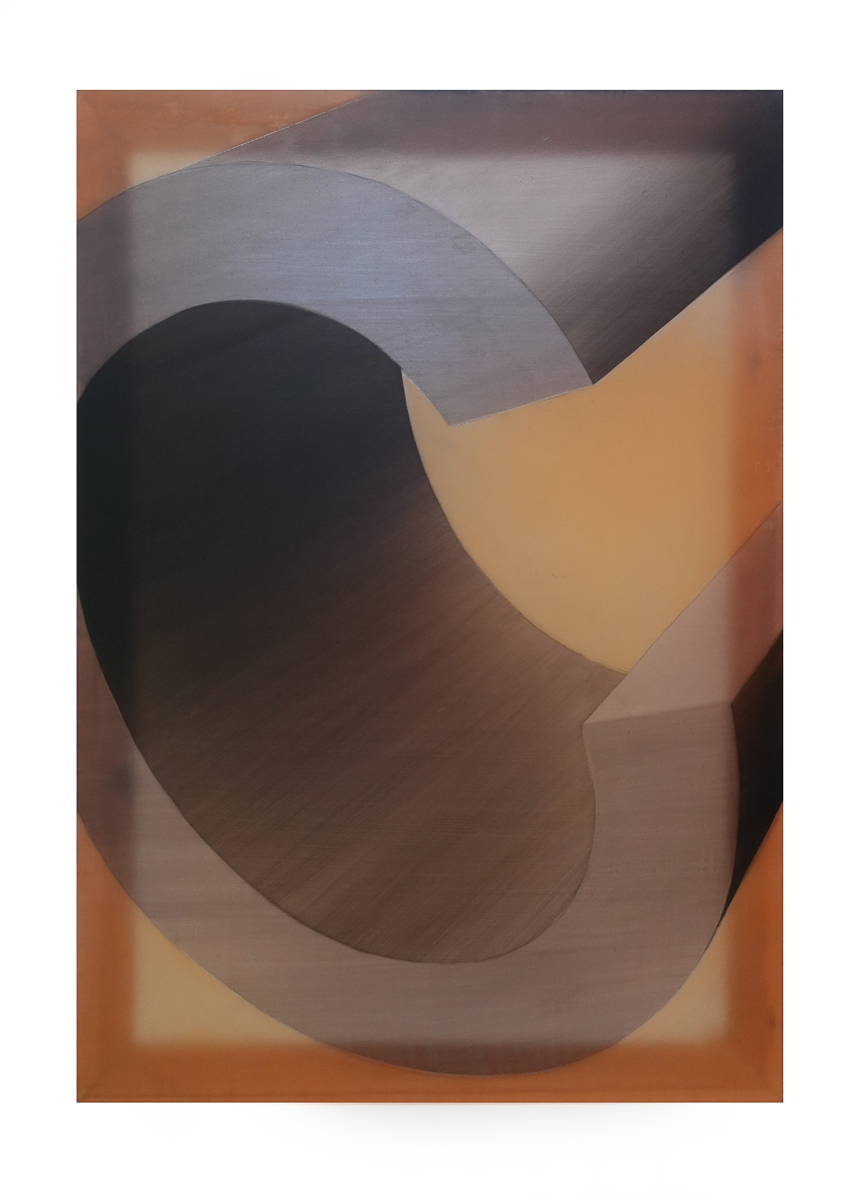
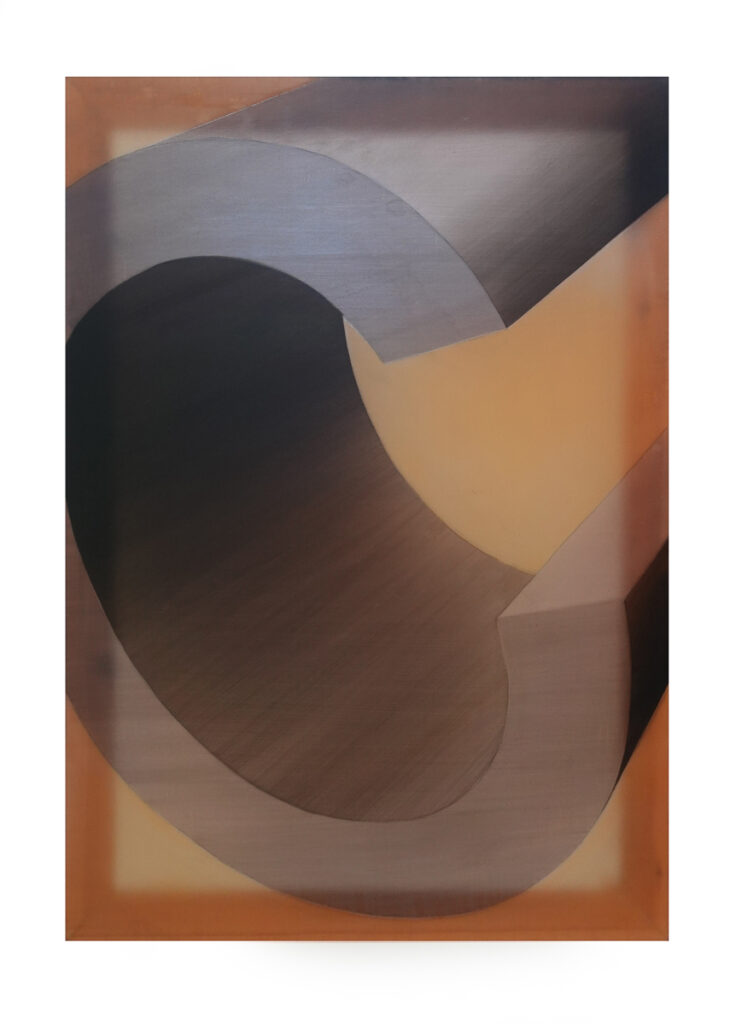
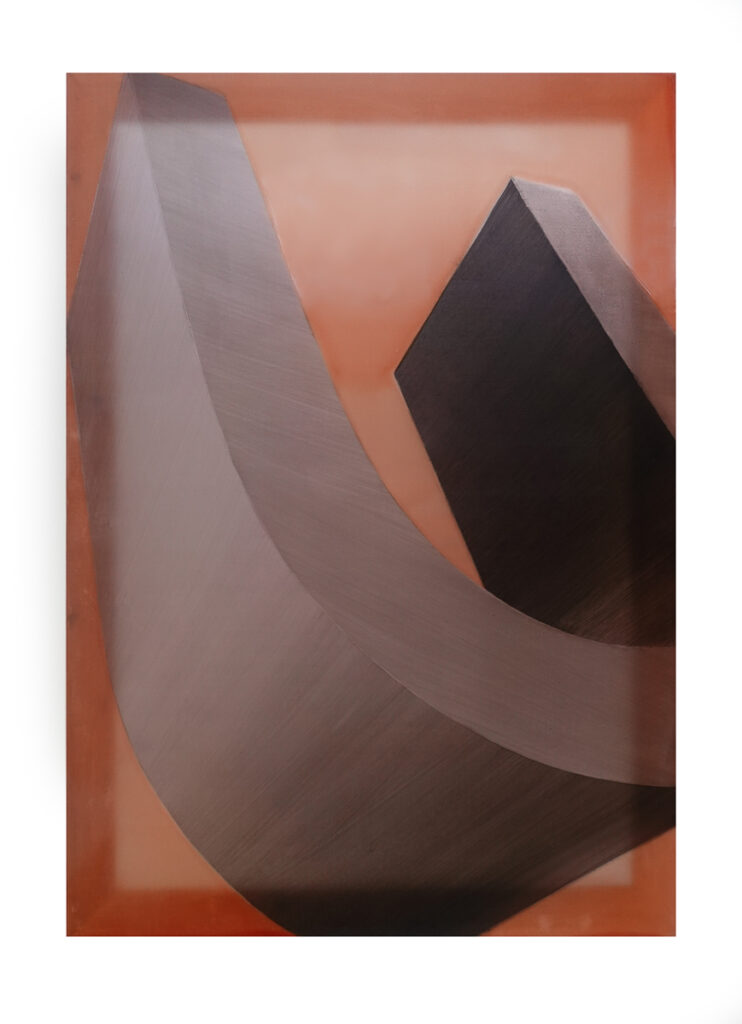
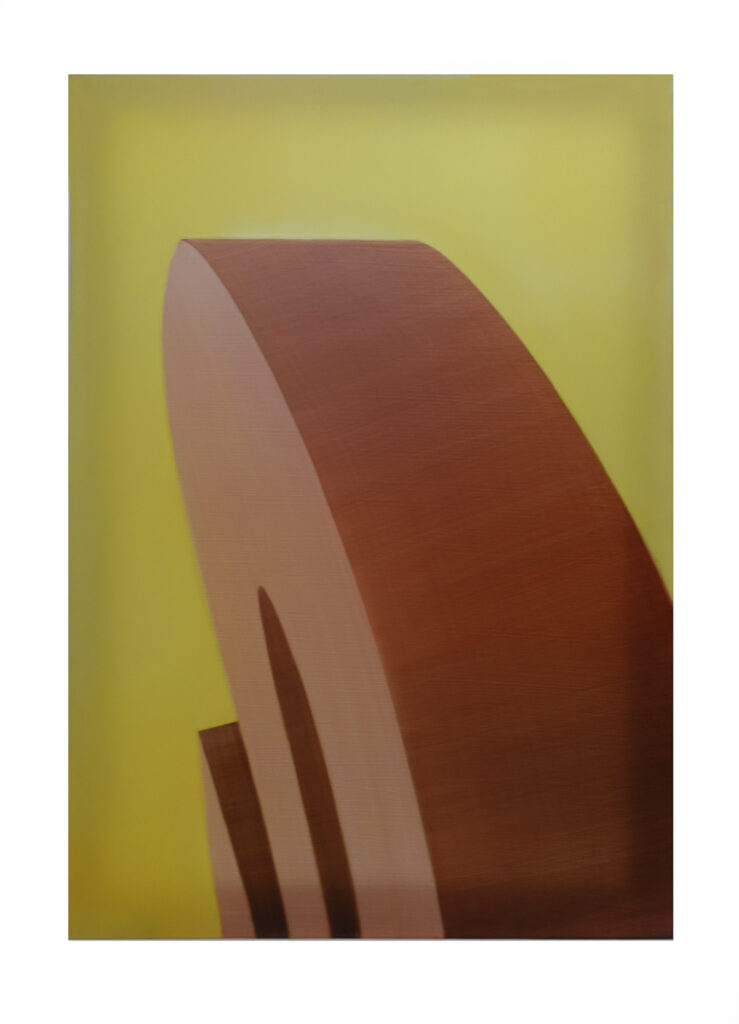
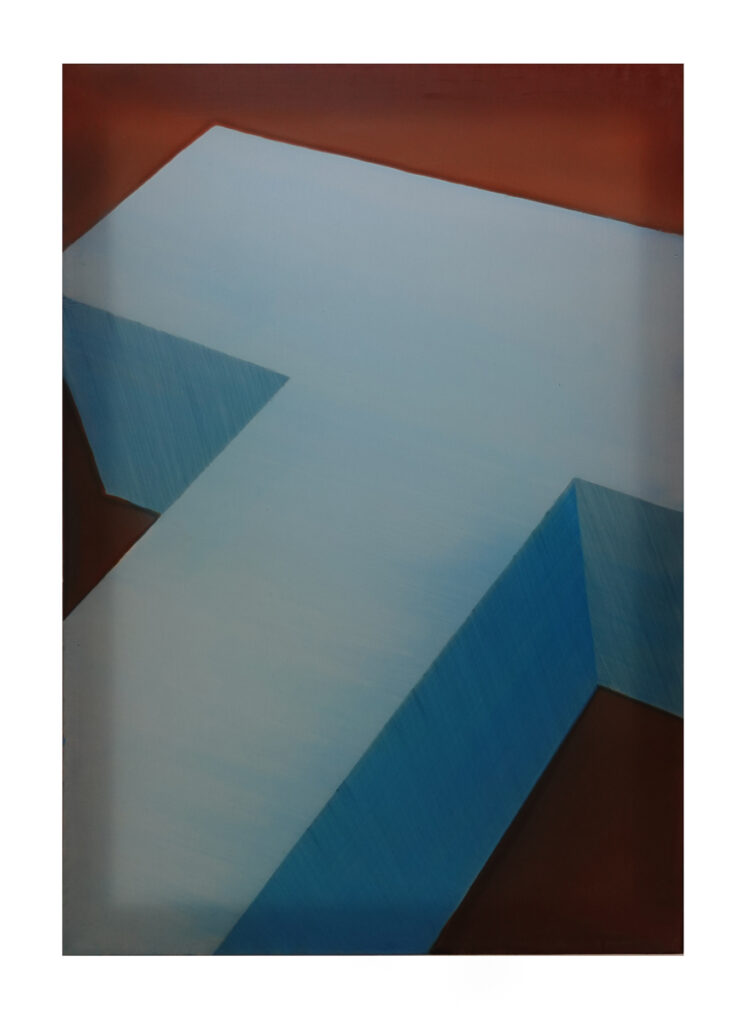
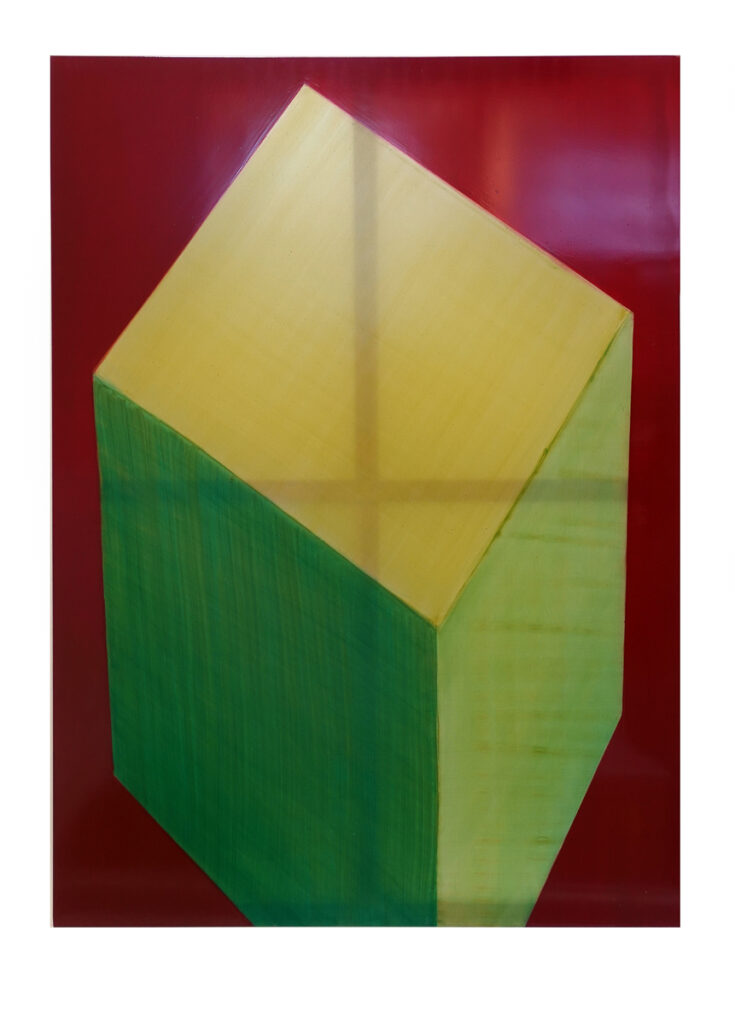
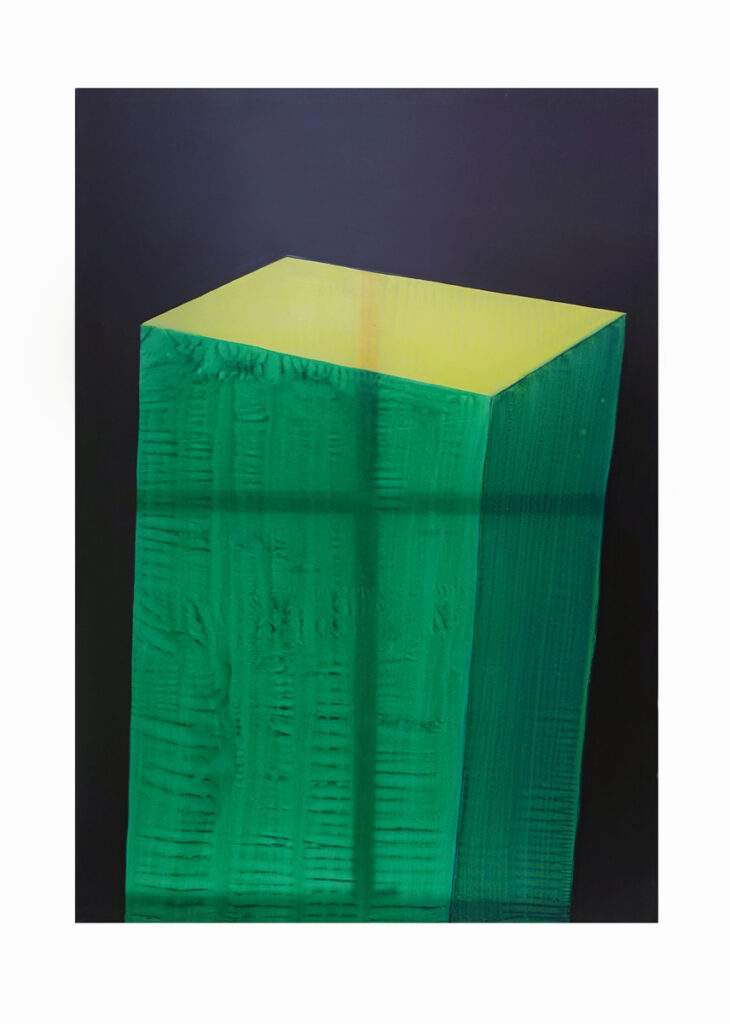
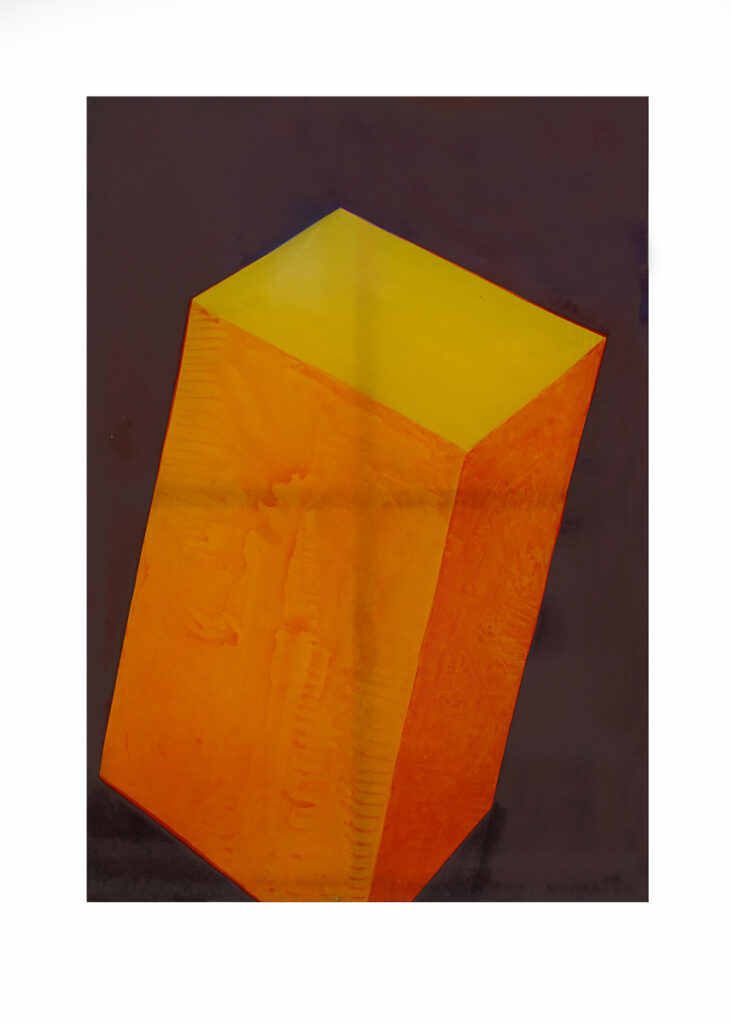
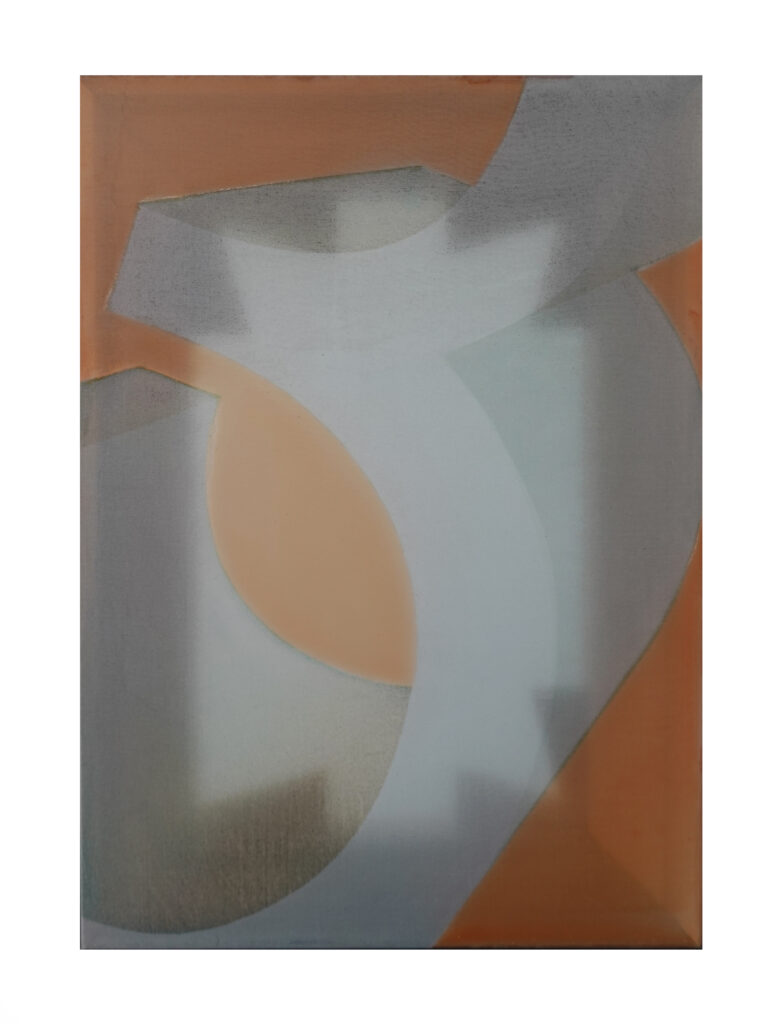
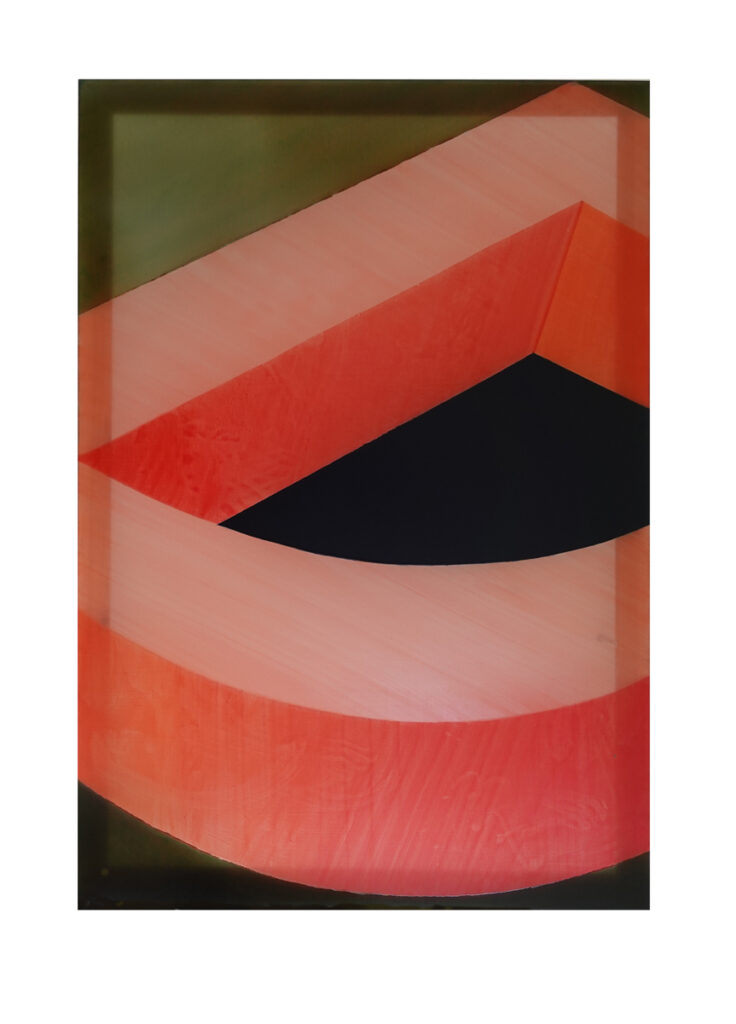
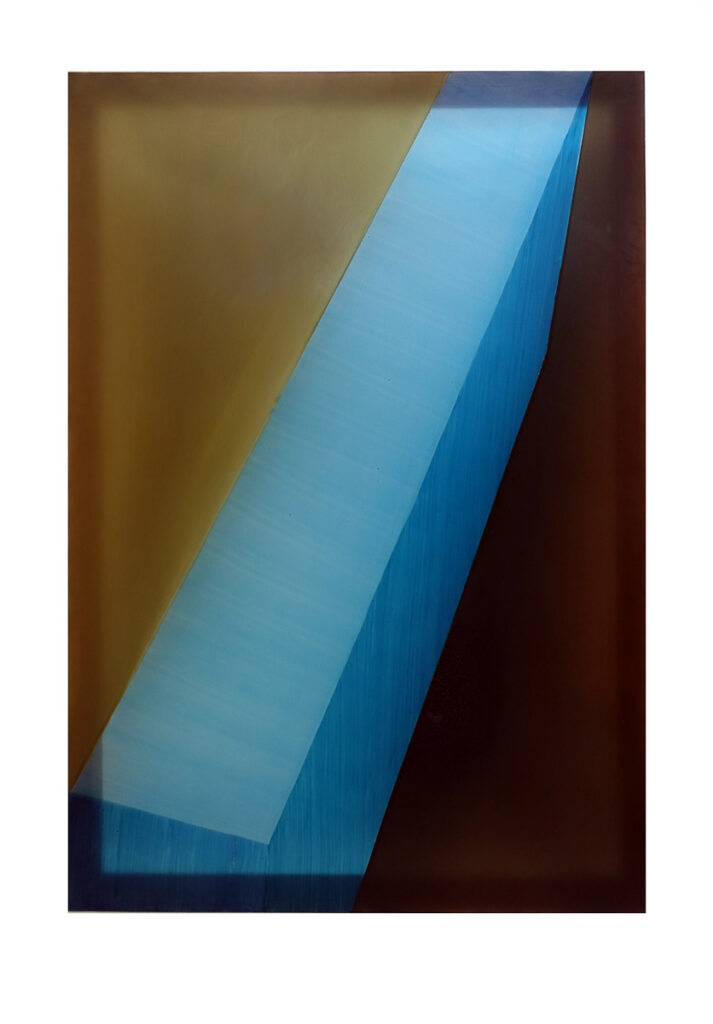
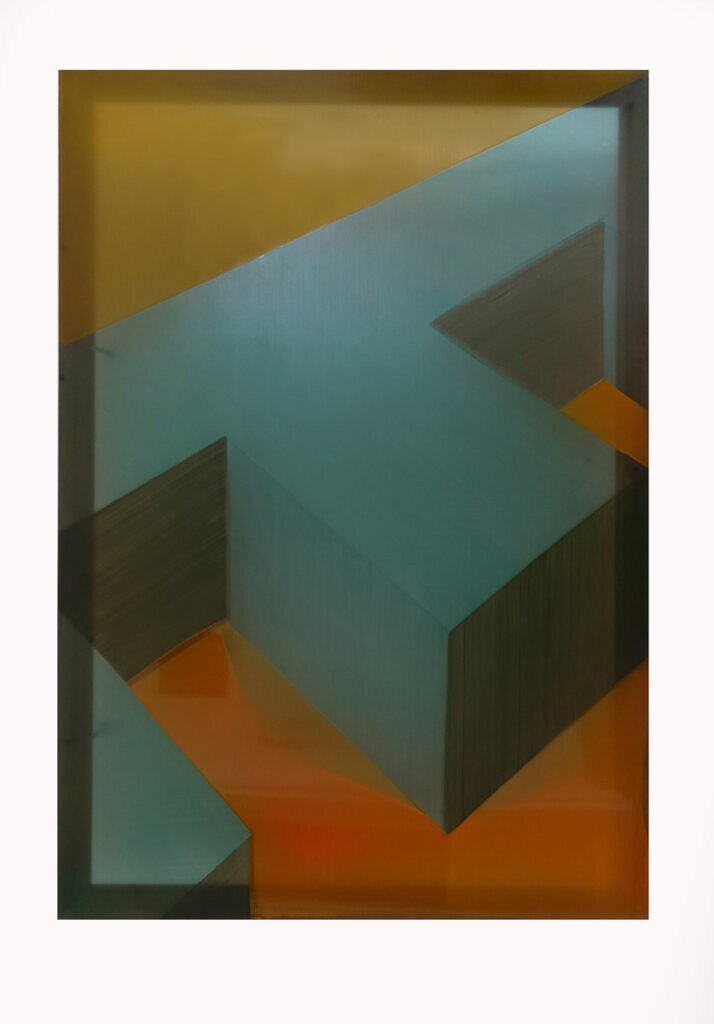
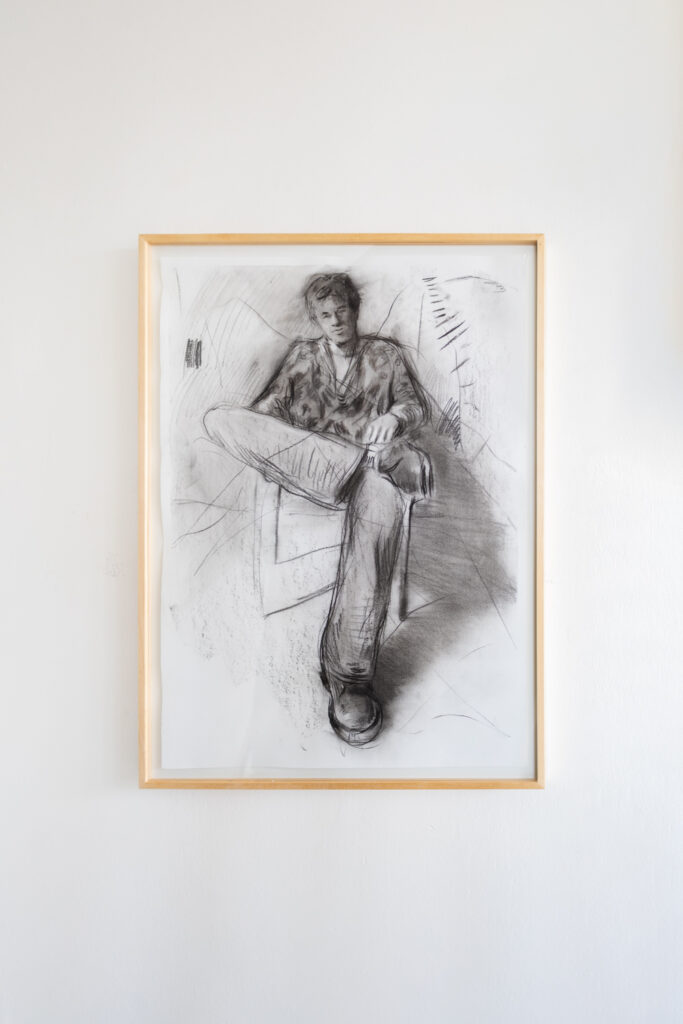
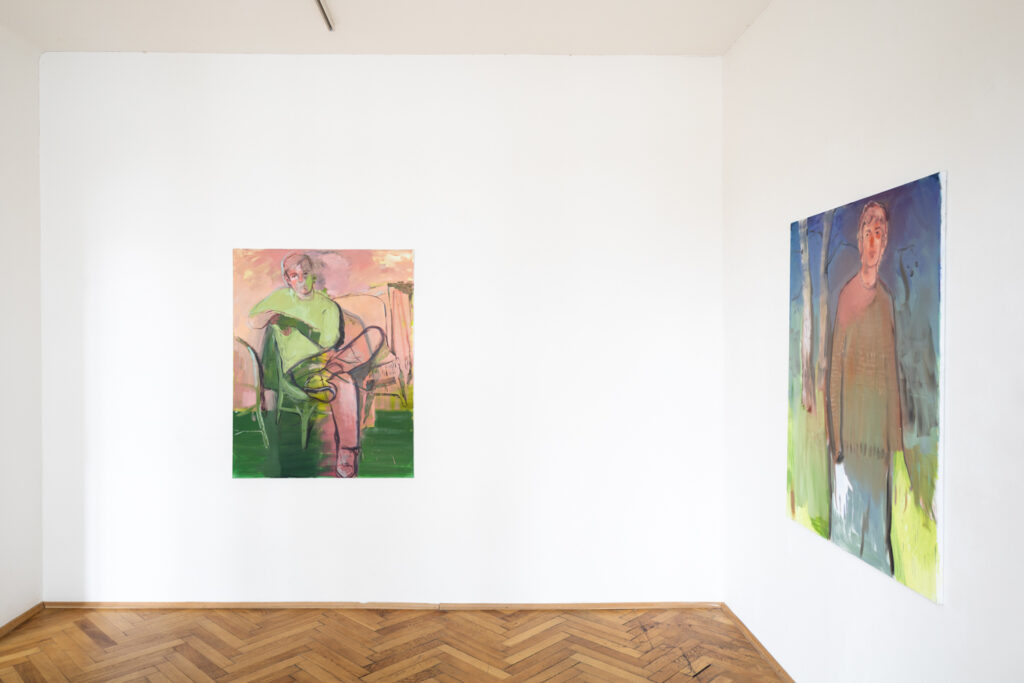
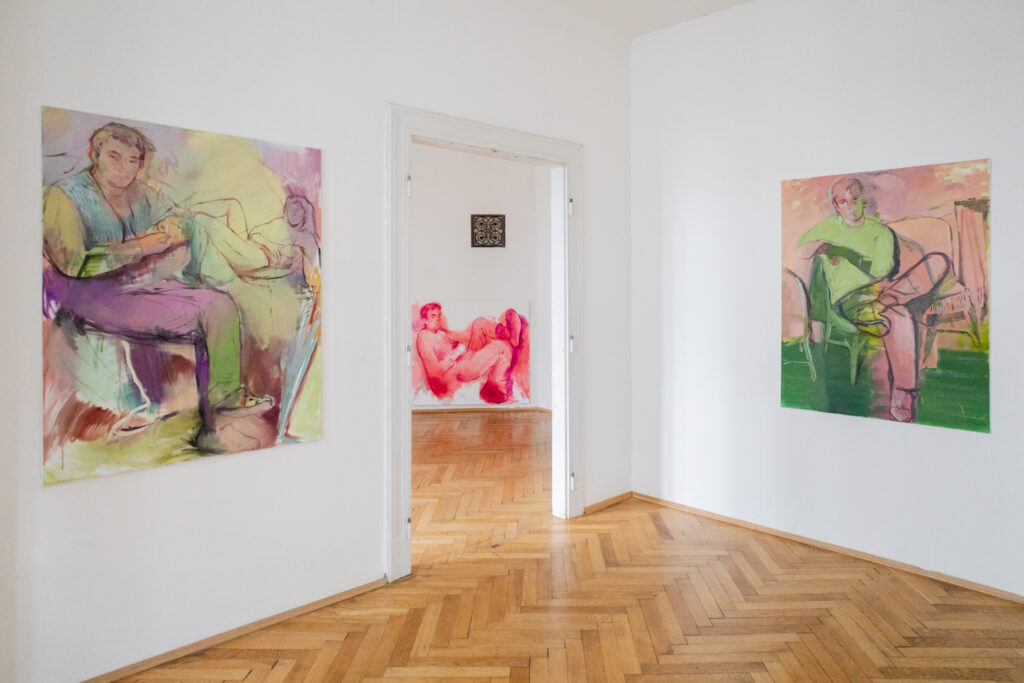
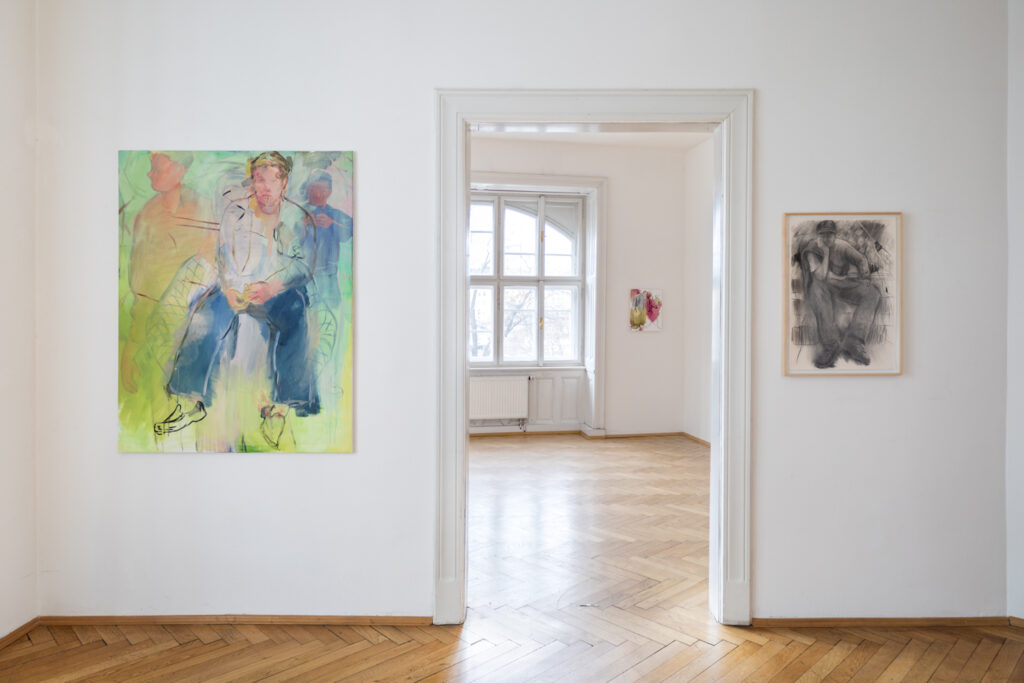
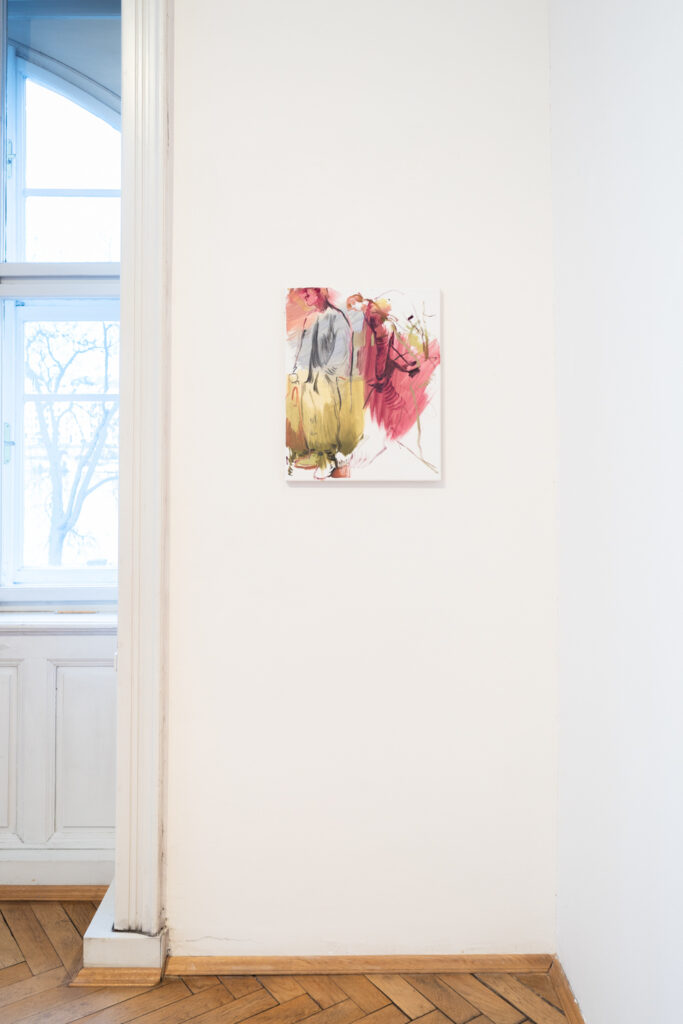
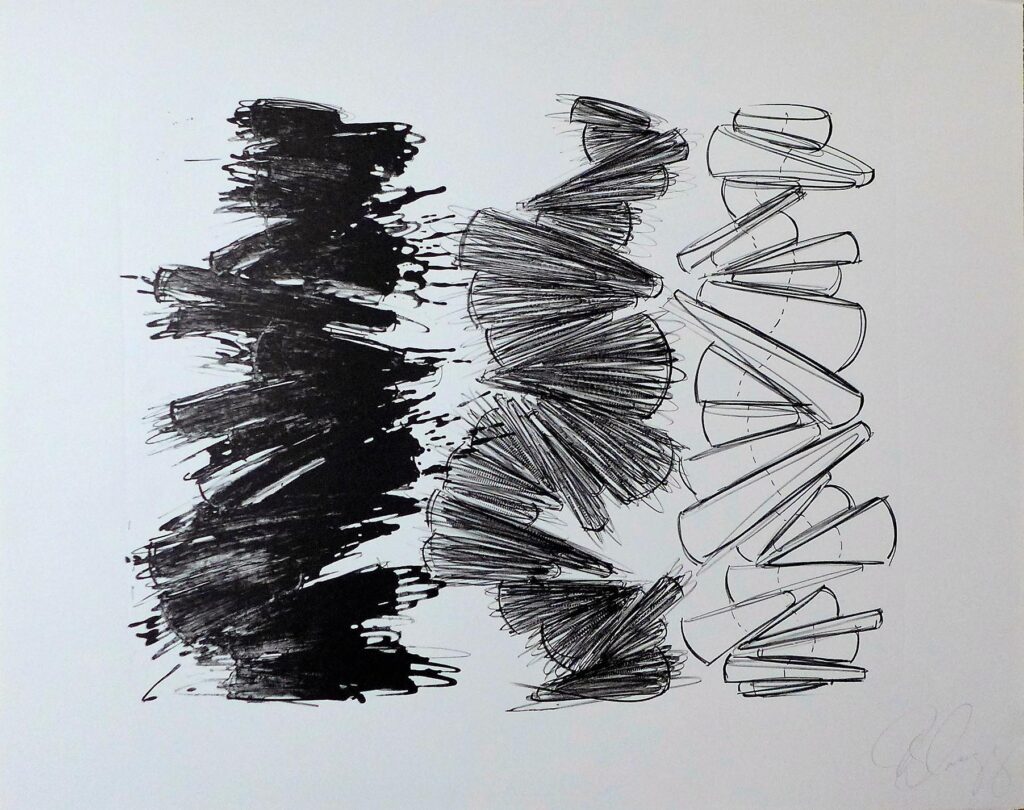
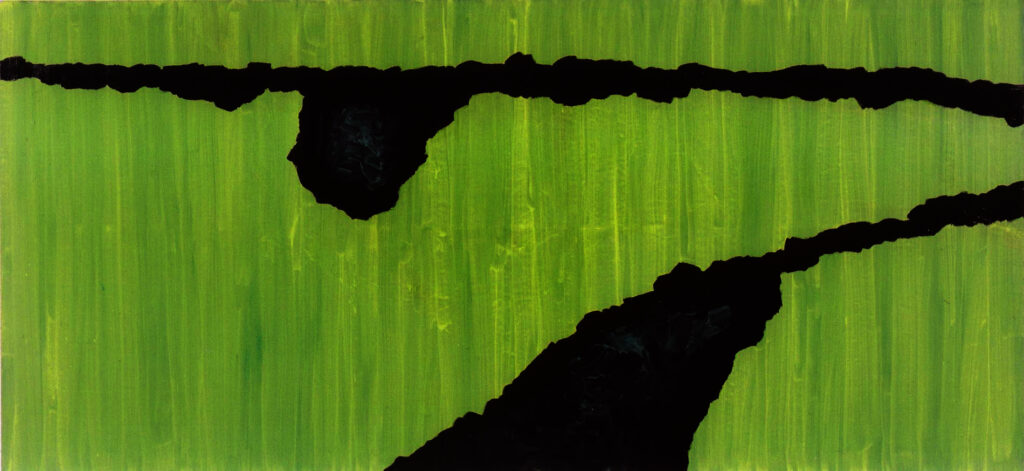
New paintings by Jakub Čuška and Martin Matoušek will be complemented with (post)modernist, functionalist, and Art Deco furniture: armchairs by Jindřich Halabala, a Bauhaus table (Eva & Andor Weininger), a sofa designed by Philippe Starck or Paolo Deganello, an original iconic “lounge chair” by Charles & Ray Eames, a Napako lamp, a writing desk designed by Scott Burton, and also chairs by Jasper Morrison and a vase by Bořek Šípek.
Open through October 30, Wednesday through Friday from 2:00 p.m. to 6:00 p.m. or by appointment.
On Saturday and Sunday, September 26 and 27, from 2:00 p.m. to 6:00 p.m.
Michael Biberstein, Jakub Čuška, Matyáš Chochola, Kateřina Komm, Jan Kotík, Kaja Lahoda, Martin Matoušek, David Shrigley
12. 6. - 10. 7. 2026
We cordially invite you to the opening of our spring-summer accrochage on Thursday, June 11, at 5 p.m., showcasing an overview of the gallery’s activities, not only from the past exhibition season.
Canvases by Jakub Čuška previously seen only at the art fair booth, experimental paintings, painting-objects, and works on paper by Jan Kotík, terrarium background by Kaja Lahoda, as well as glass sculptures by Matyáš Chochola or David Shrigley’s meme-worthy drawings.
17. 4. - 30. 5. 2026
Curator: Filip Kazda
“Only wounds give shape to things. And to life.”
The novel *Stone and Pain* remains a constant point of reference for the author – a space in which the choice of a more demanding, “worse” path is affirmed as a conscious stance.
The painting, understood not as a mere illusion but as a field of projection, becomes, in Matoušek’s case, the vehicle for processes that shape both the author himself and his position in relation to others.
20. 2. - 11. 4. 2026
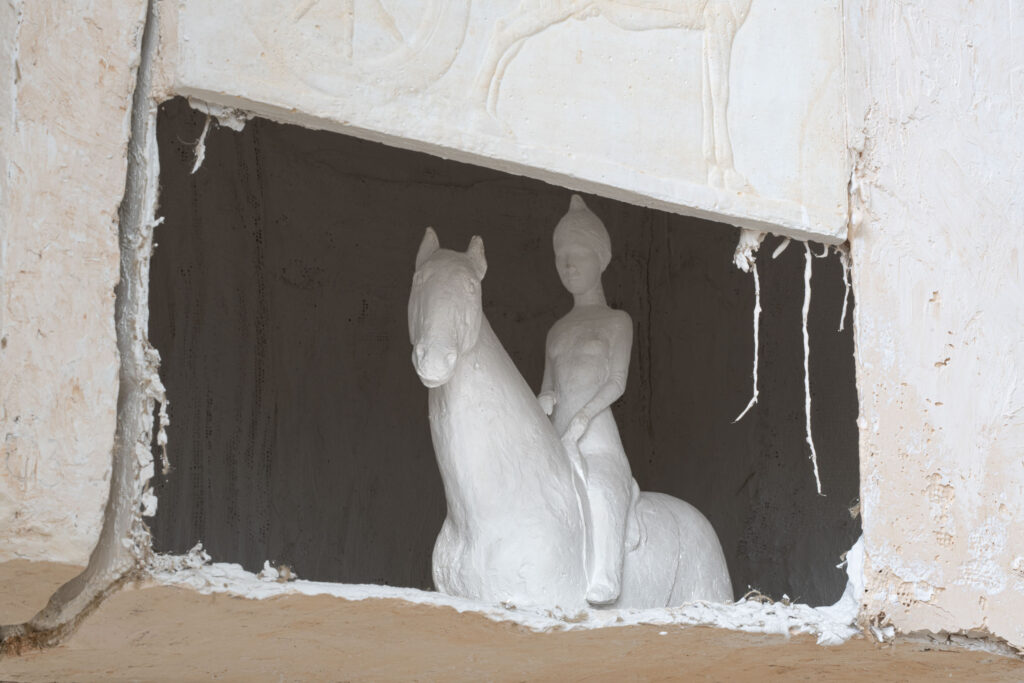
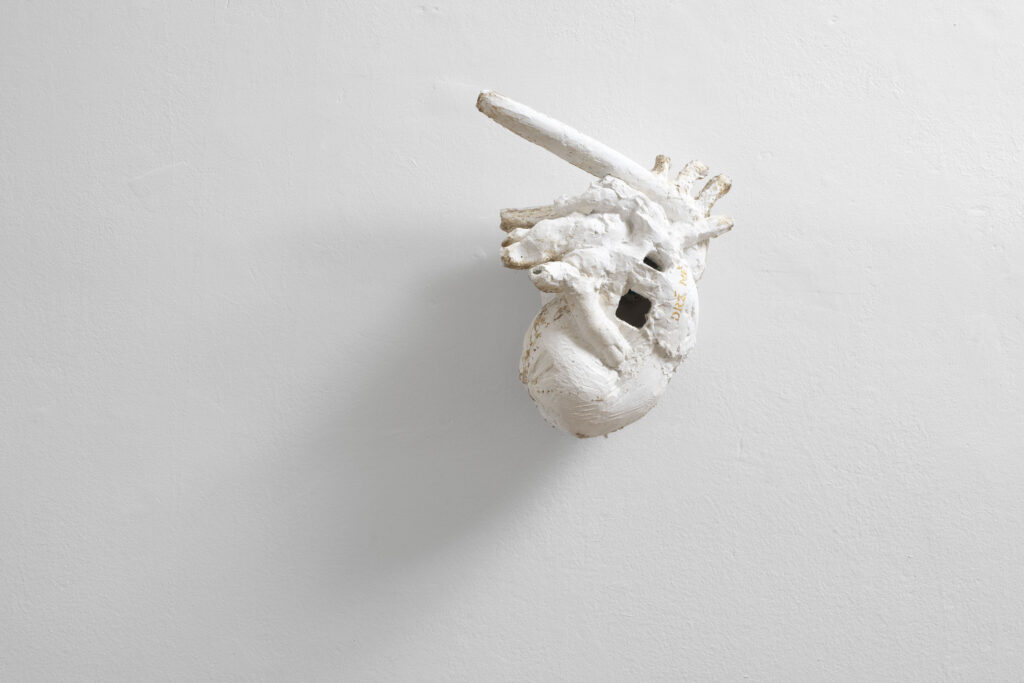
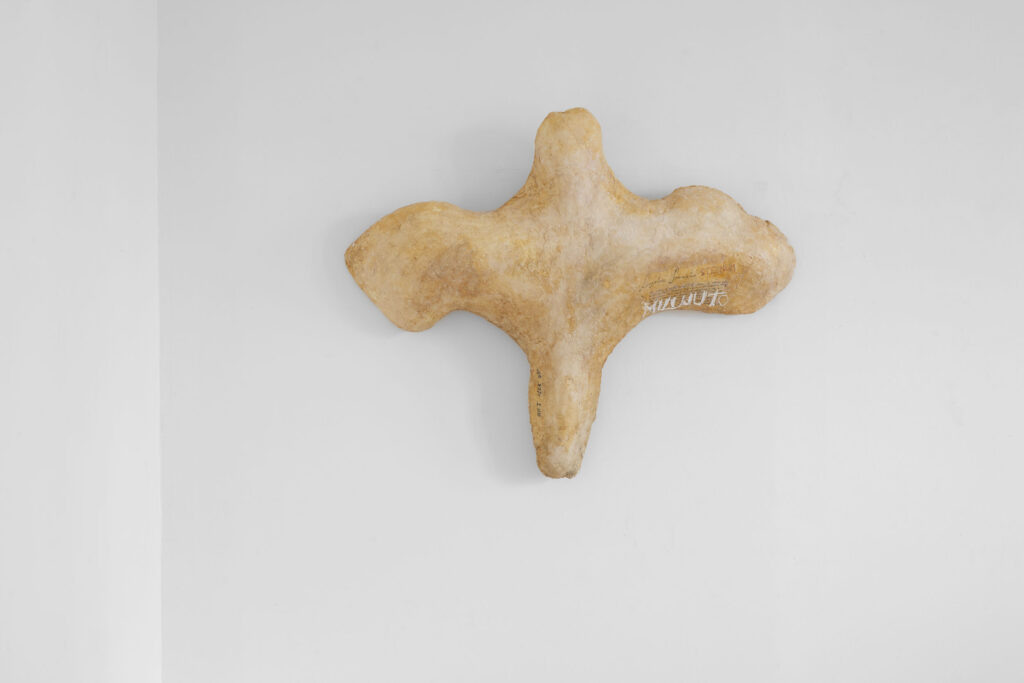
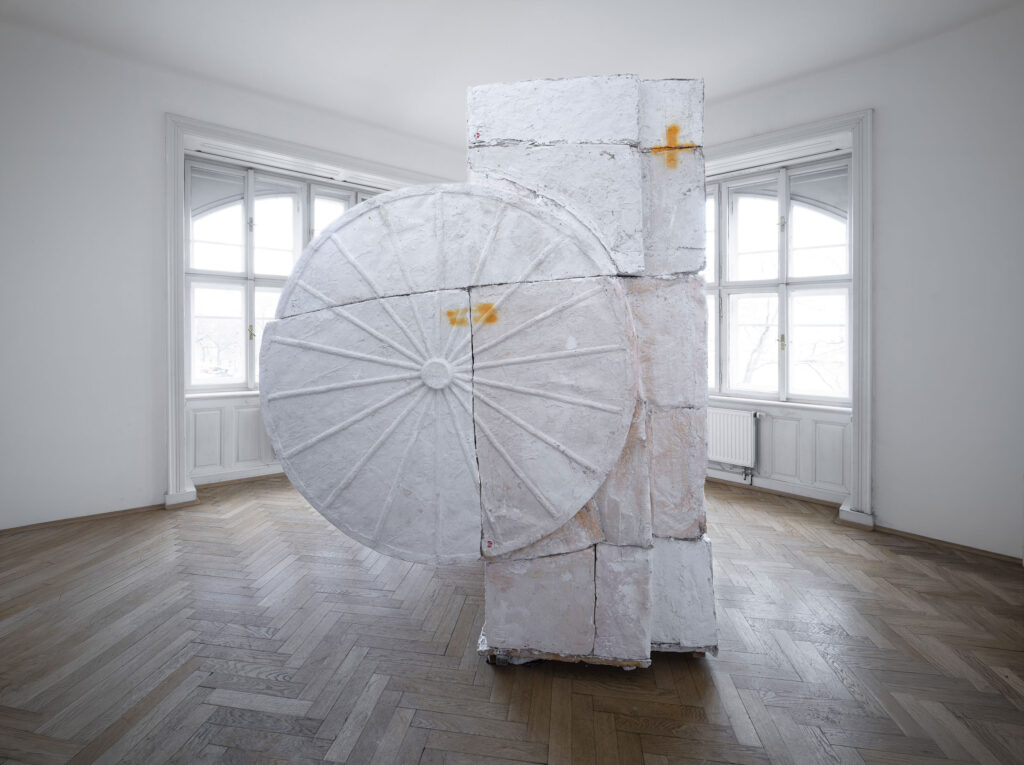
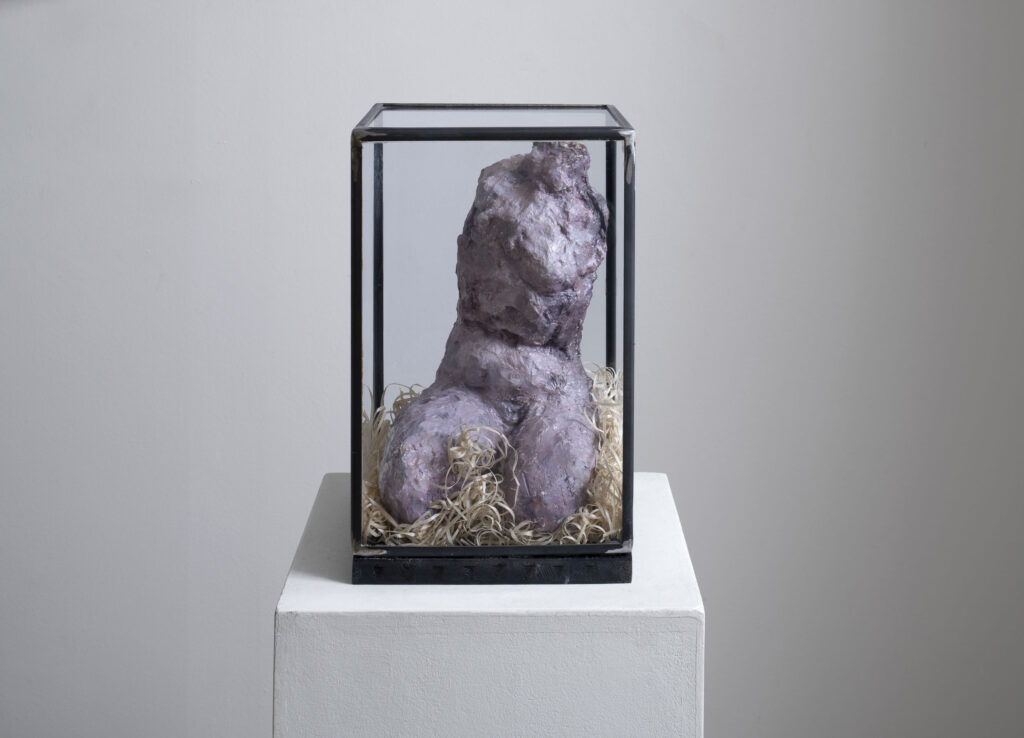
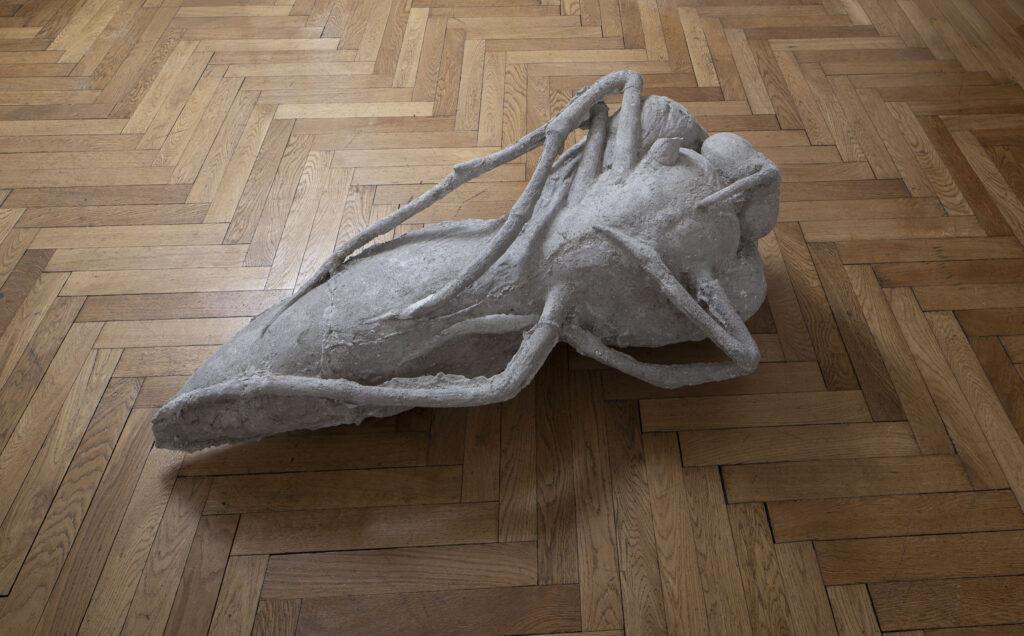
Kateřina Komm works with sculpture as a medium capable of recording personal and collective memory and narrating in forms associated with historical mythologies. Her generously constructed objects comprise references to the imagery of extinct civilizations along with imprints of emotional and physical experiences. She sometimes supplements her monumental and variable sculptural compositions with performative interventions and captures them with her own photographic documentation.
Kateřina Komm (*1990) lives and works in Prague. She graduated from the Academy of Fine Arts in Prague, where she studied sculpture. She works as an assistant in Vojtěch Míča’s studio at the AVU Prague. Her work is currently on display at Bastion XXXI in Karlov, Prague, and at MUD Benešov. Her sculptures were part of the group exhibitions Estranged Tools at Garage Gallery and The Heart is a Temple at the Imperial Stables of Prague Castle.
28. 11. - 31. 1. 2026
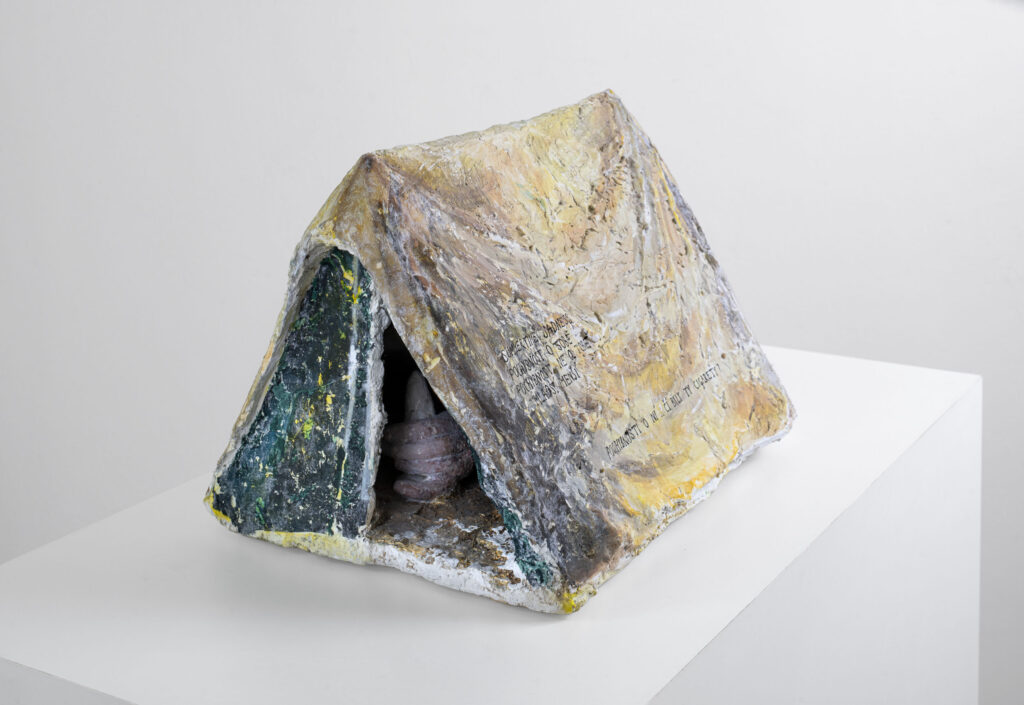
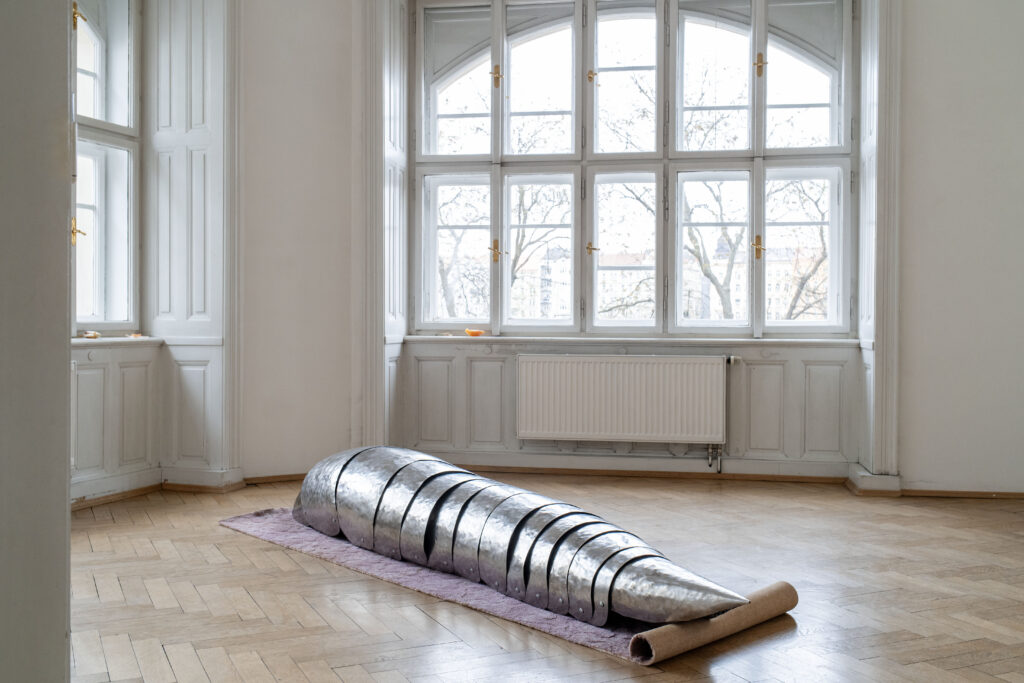
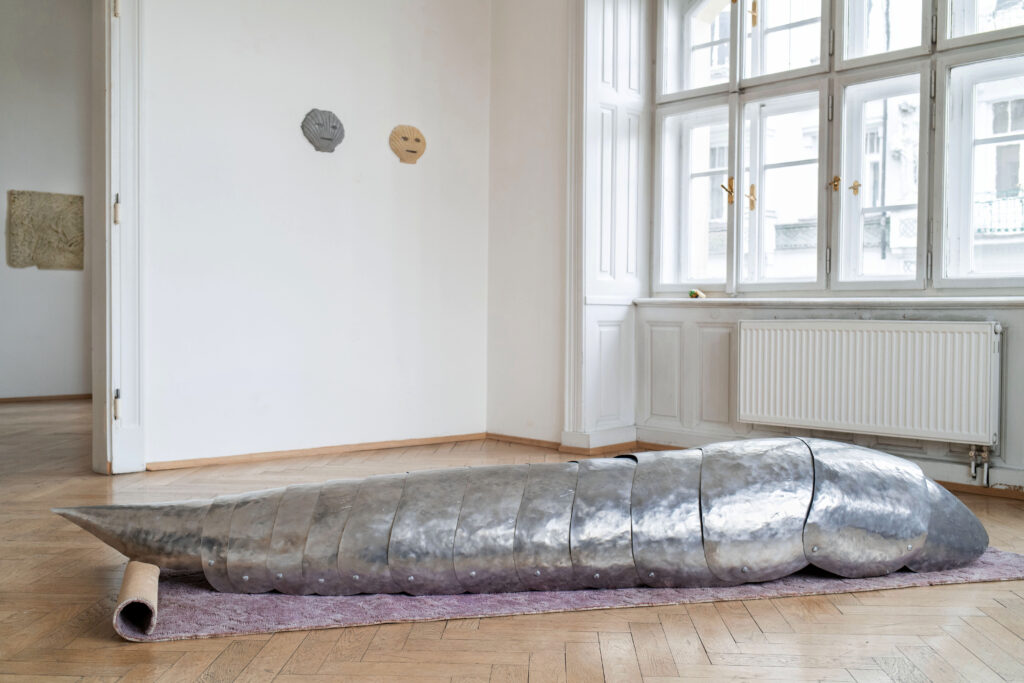
In her solo exhibition No Place like Home, Danish artist Kaja Lahoda follows the imaginary boundaries between home and the bodies that inhabit it. Through her subtle multimedia installations and use of sculptural and found objects, she guides us along the border of protective layers and their disruption. Domestic scenes crafted with care, furnished with references to exoskeletons and biominerals, reveal the difficulty of separating the inner and outside world. Clusters of non-human agents occupy the spatial outlines of artificial dwellings, padded with faux rocks and bolstered with myths of feeling at home.
Kaja Lahoda (1994) graduated from the School of Visual Arts at The Royal Danish Academy of Fine Arts in Copenhagen. This year, she prepared a solo exhibition entitled Within The Wall at Tranen in Hellerup, Denmark. In recent years, she has presented her work in group exhibitions such as the Floral and Machine intervention at St. Paul’s Church in Basel and Rosenvængets Salonen at Kunstsalonen in Copenhagen or This is Not a Memoir at Polansky Gallery in Prague. She is a laureate of the Carl Nielsen and Anne Marie Carl-Nielsen’s Foundation Award. Her works are represented in the public collections of the University of Copenhagen and Aarhus University.
Býti umělcem na částečný úvazek na dobu neurčitou
10. 10. - 22. 11. 2025
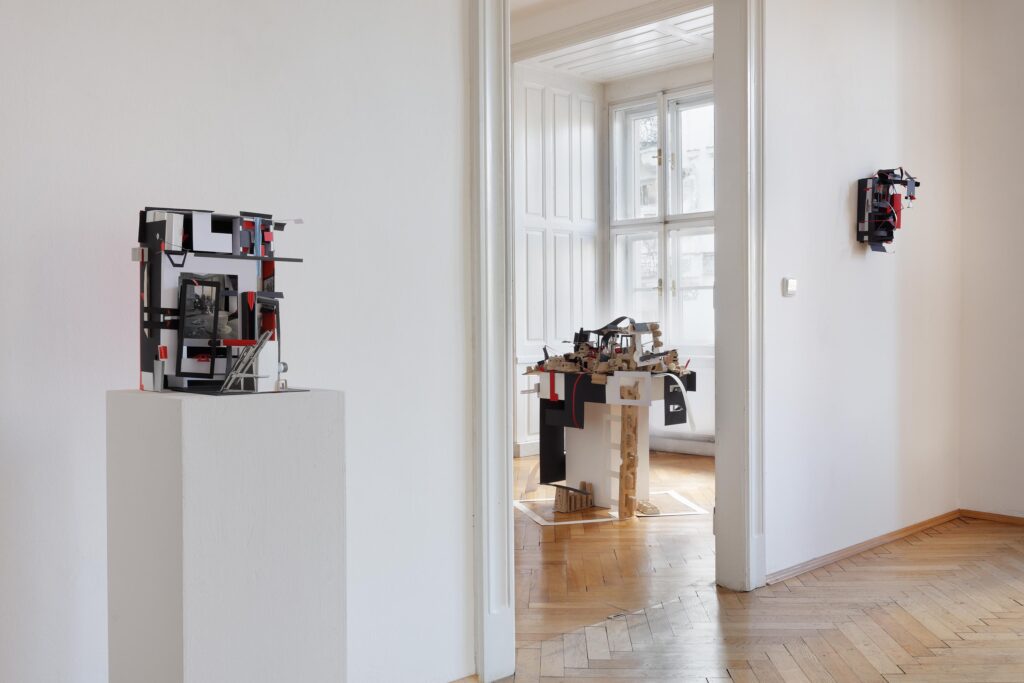
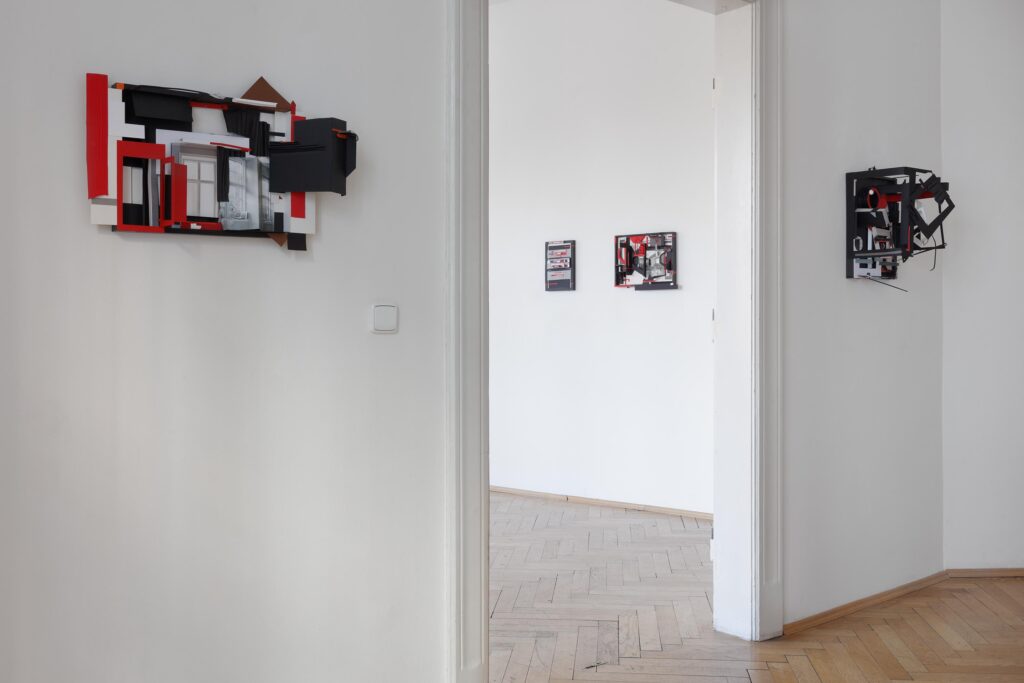
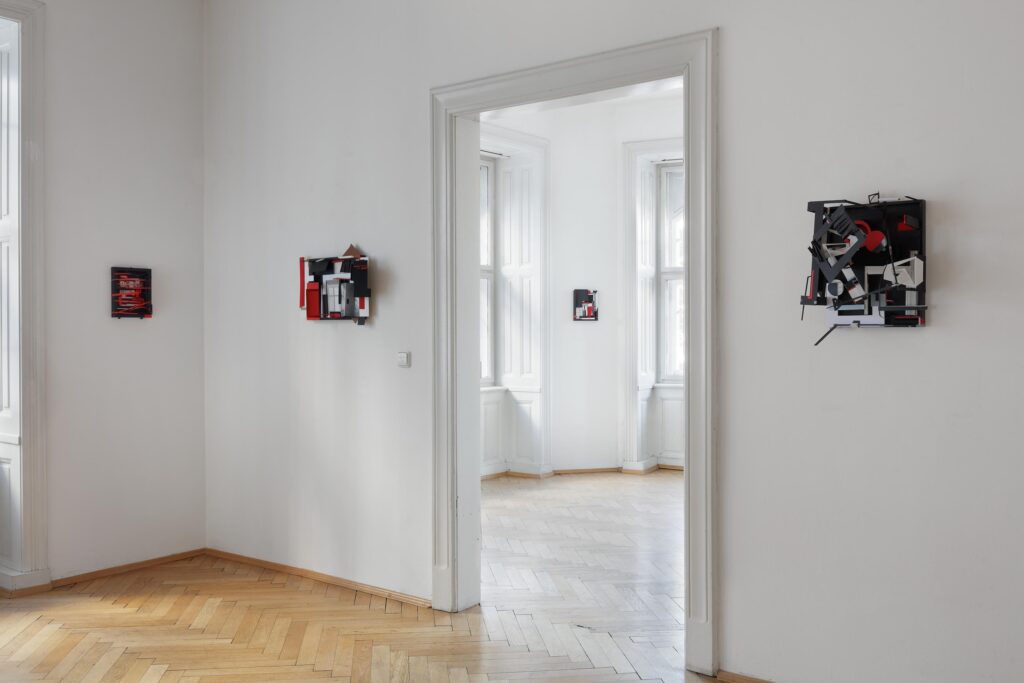
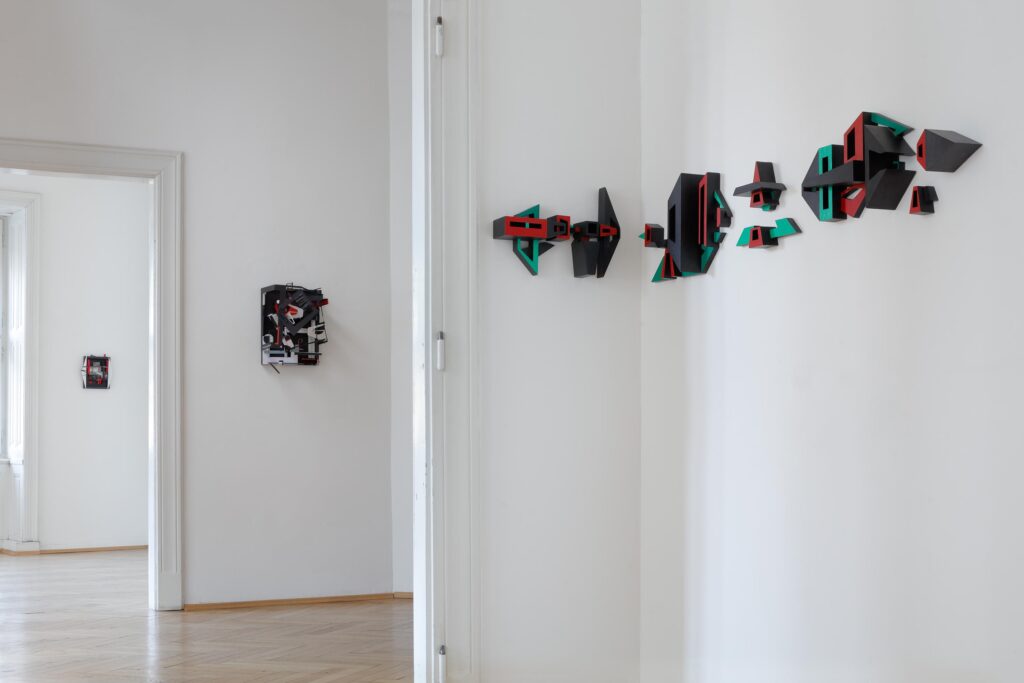
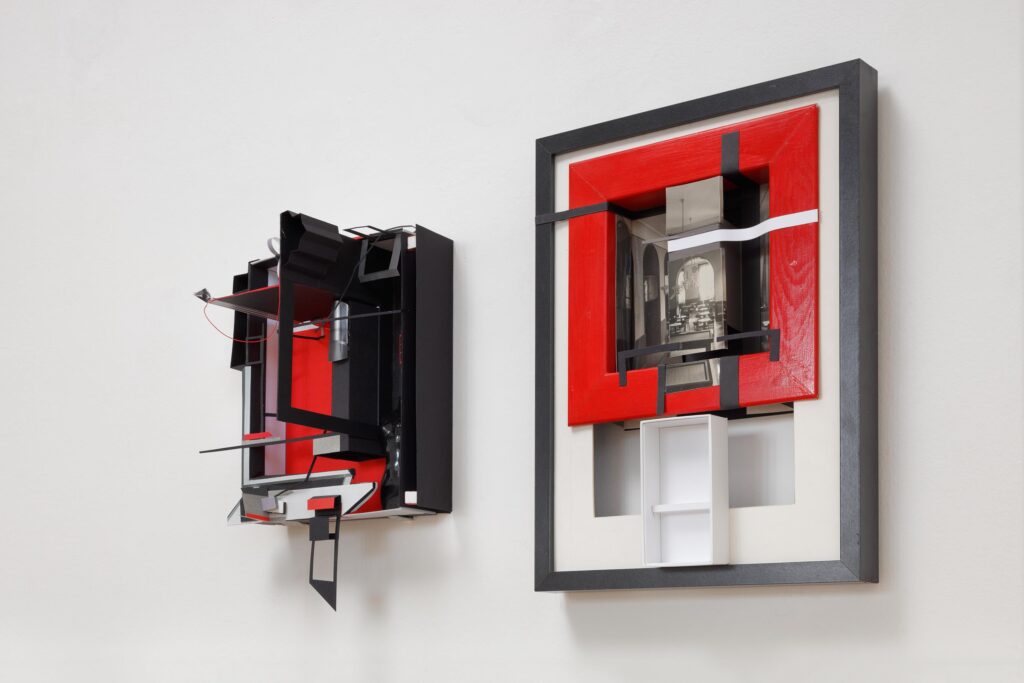
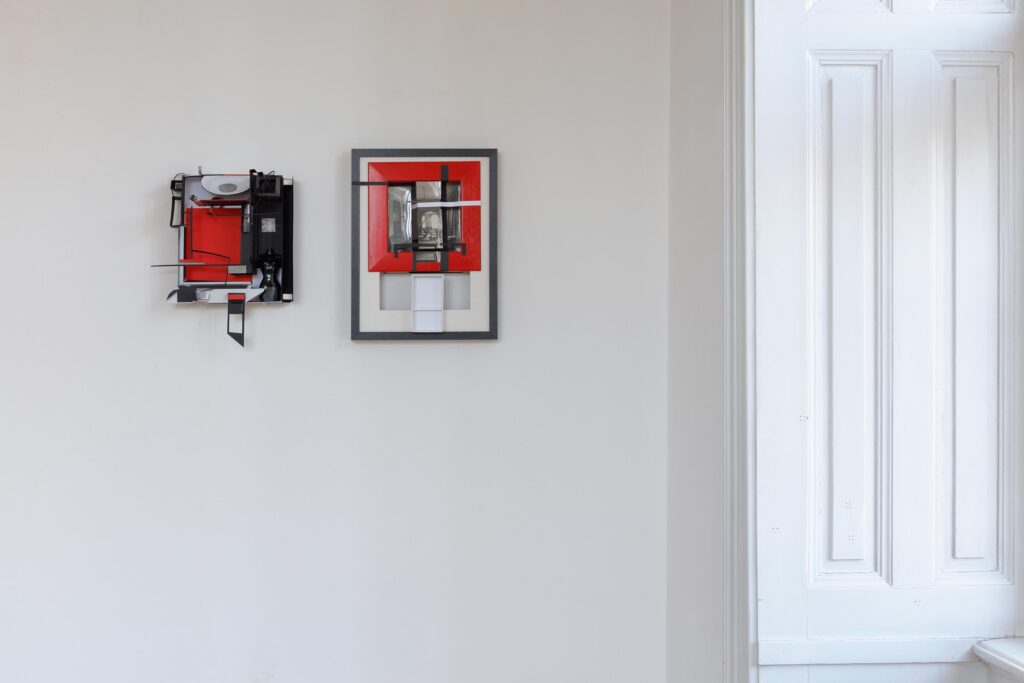
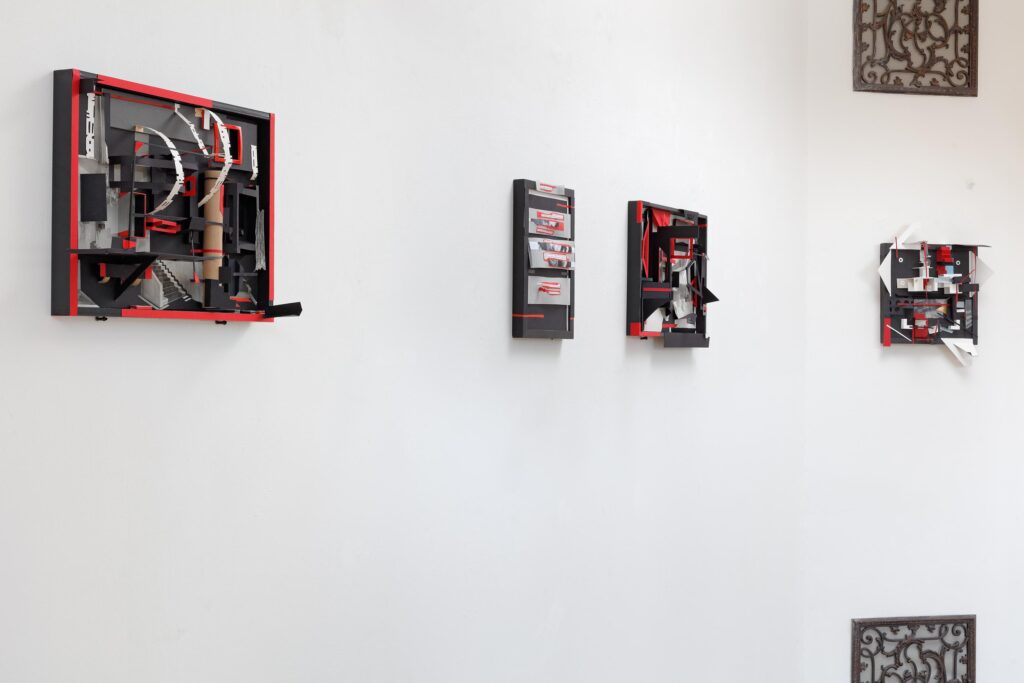
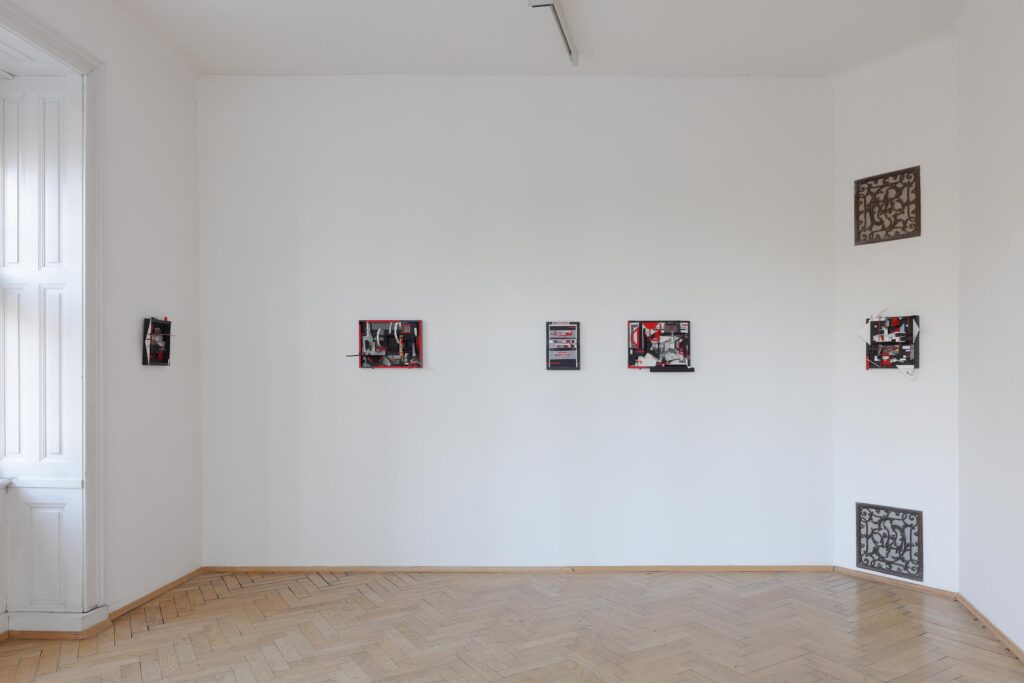
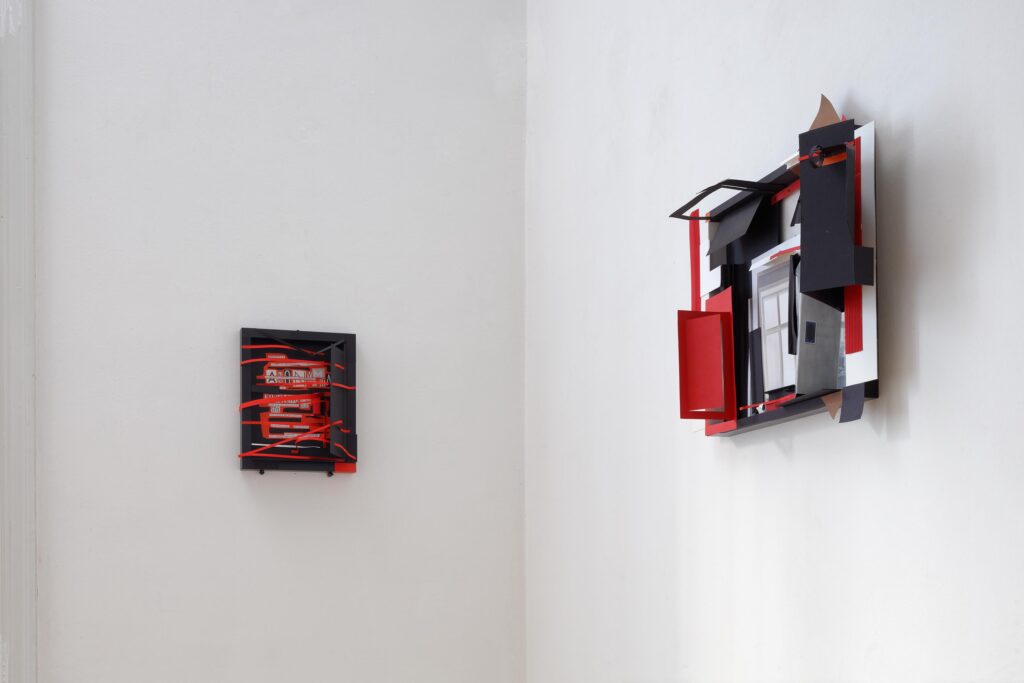
Reflections on ephemerality and personal defiance against clinging to the established notion of the eternity of art objects lead Petra Nováková-Ondreičková to strive not to leave behind artistic ballast, to return to her earlier work, and to maintain it in a changing form. Three-dimensional assemblages and collages of interior fragments thus function as contemporary remakes of previously created objects and ideas. The starting point for her reflections is Hannah Arendt’s Vita Activa, which has long accompanied her in her work.
Opening: 20 May 2025
21. 5. - 12. 7. 2025
The UK-based Czech artist Jan Mladovský presents a series of silk paintings for the first time in the Czech Republic. The works focus on the human understanding of text in time and the perception of a shared historical narrative of past events as a parallel reality. The paintings, which work with the decomposition of text into individual letters and their reassembly into a discontinuous message, take on a new relevance in today’s context with the knowledge of large language models and machine learning.
5. 2. - 12. 4. 2025
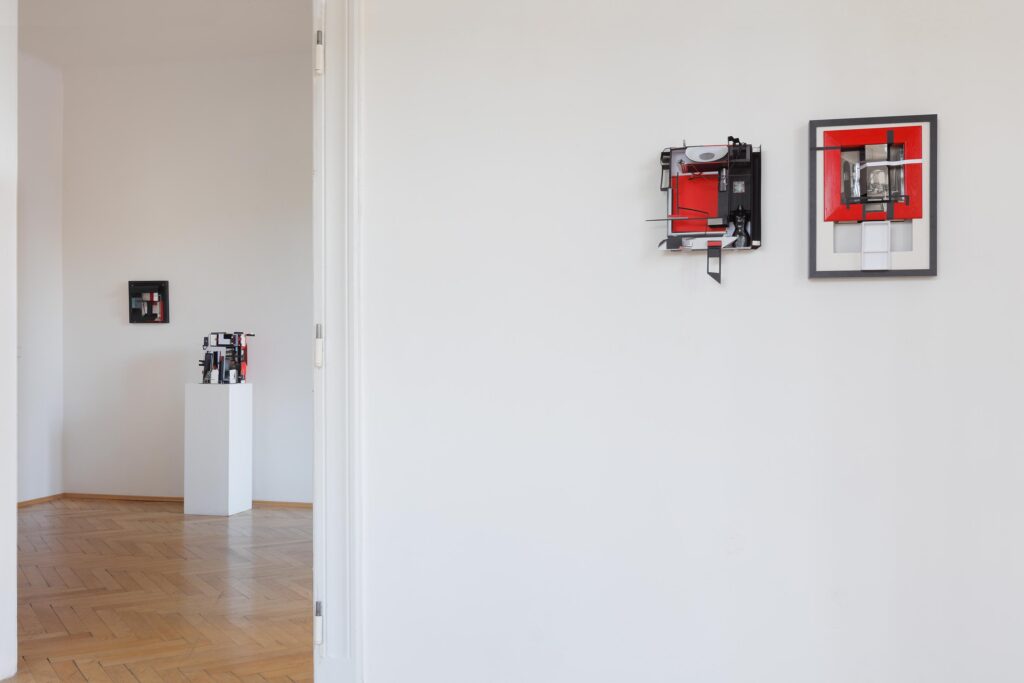
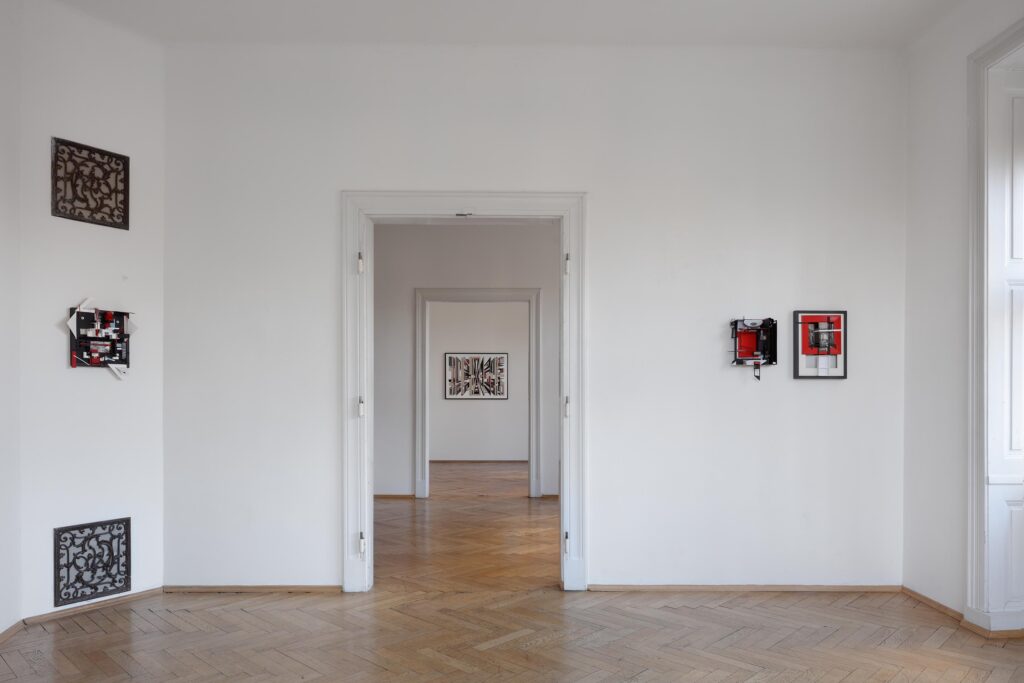
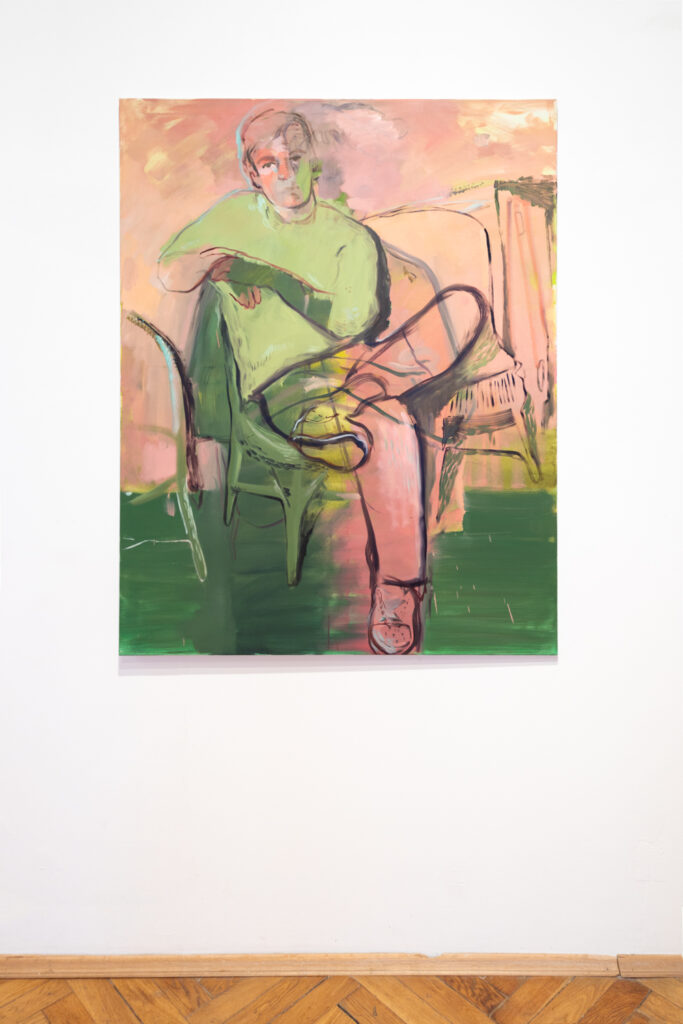
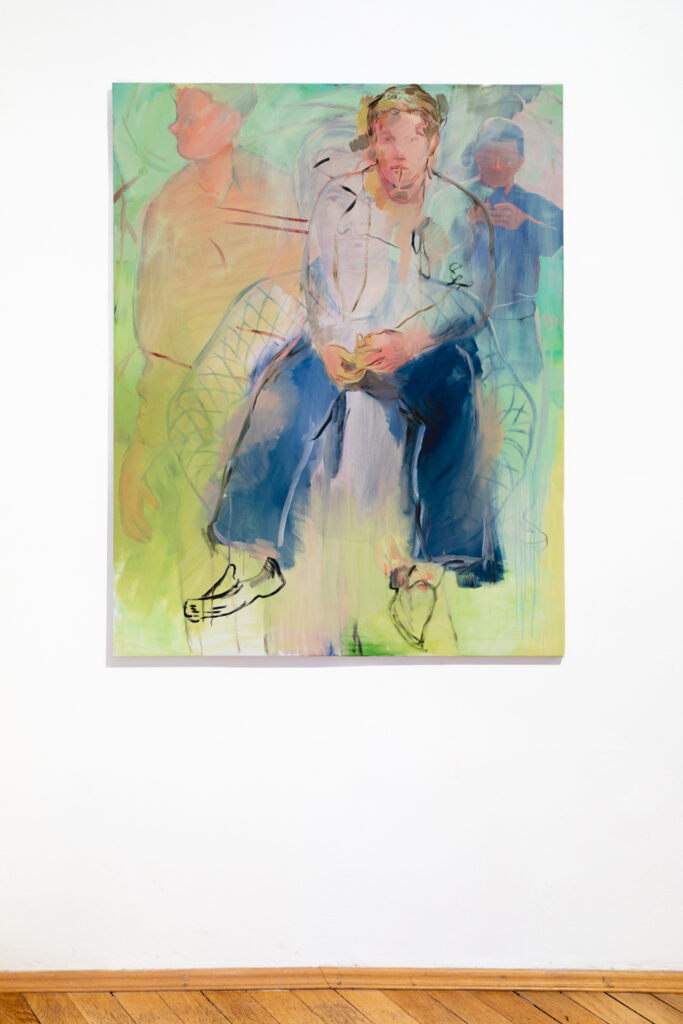
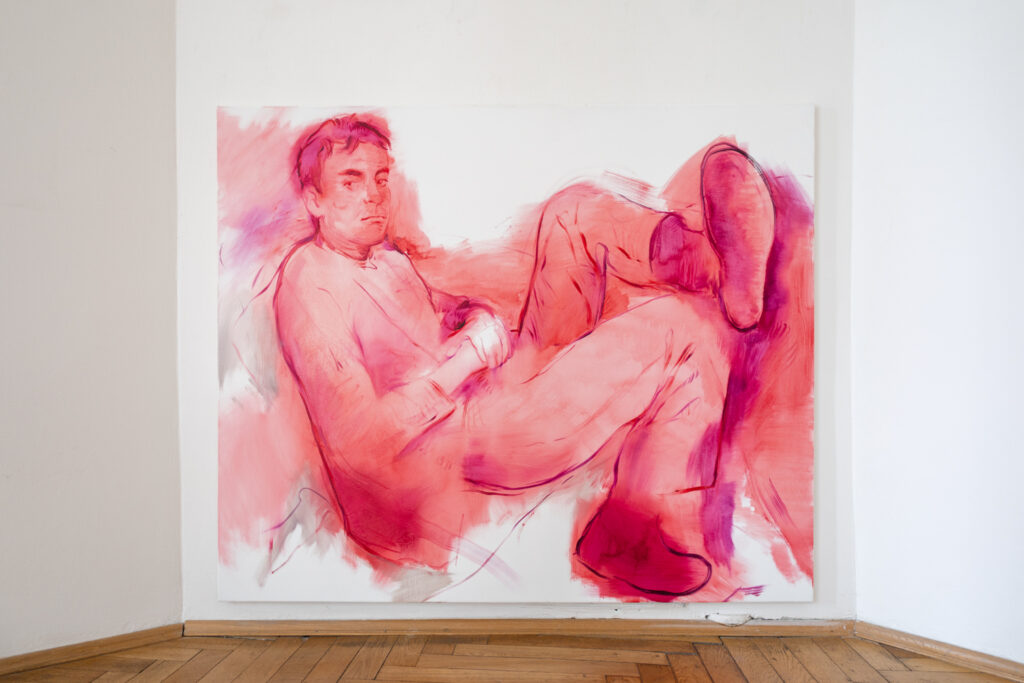
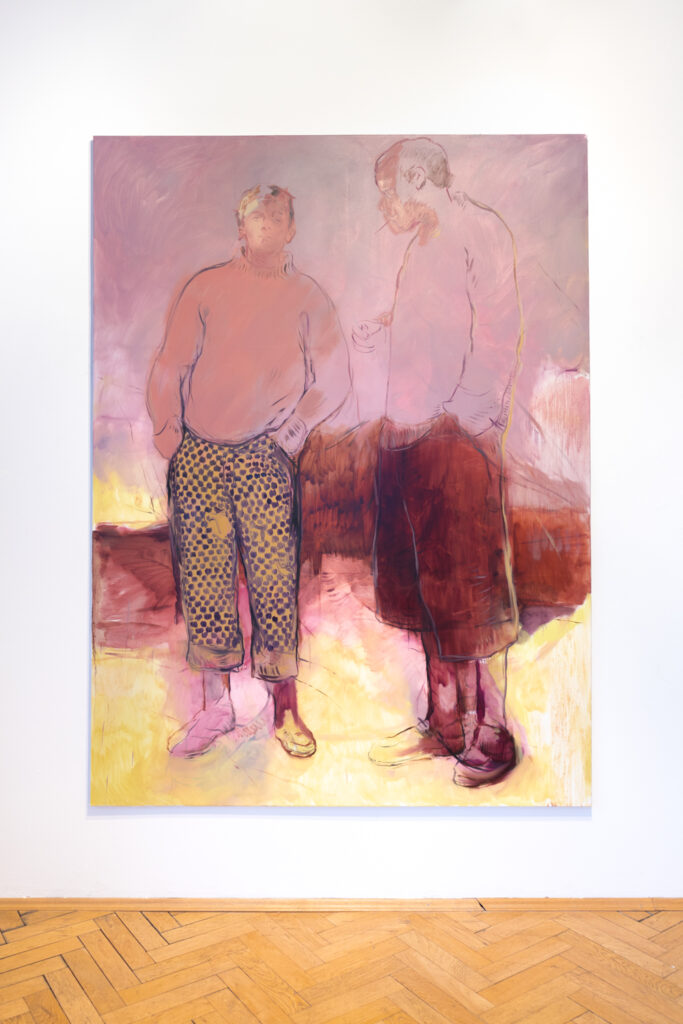
The Lost Dandy exhibition is like the eponymous painting, a non-specific portrait of someone who could be a hero of today. Jakub Čuška’s current paintings depict a series of distinctively dressed figures with stark outlines, often in moments of rest or detachement from their surroundings.
Tony Cragg, Jiří Černický, Andrej Dúbravský, He Jinwei, Krištof Kintera, Jan Kotík, František Kyncl, Ryan Mendoza, Klaus Merkel, Ioana Nemeş, David Shrigley, Katarína Poliačiková, Václav Požárek, Dieter Roth, Sofie Švejdová
7. 11. - 21. 12. 2024
At a time when the house in which the gallery is located is hidden under scaffolding due to the renovation of the façade, we would like to invite you to a renewed selection of works from the gallery’s recent exhibition programme and history.
On Wednesday, 13 November, from 6 pm, there will be a guided tour with gallery owner Jiří Švestka, where he will present the exhibited works in more detail.
John Armleder, Jiří Černický, Andrej Dúbravský, Edward Dwurnik, Krištof Kintera, František Kyncl, Klaus Merkel, Ioana Nemeş, Monika Pascoe Mikyšková, Katarína Poliačiková, Václav Požárek, Wolfgang Robbe, Dieter Roth, Markus Selg
28. 6. - 31. 8. 2024
Opening: 27 June from 6 PM
The traditional summer accrochage works as a look back and an in-depth look. The title painting, Animals by Klaus Merkel, recalls the blurred view from the train of winding country roads and fields of grazing cows running off into the distance. The exhibition borrows its title from the catalogue text for Wolfgang Robbe’s exhibition, whose illusory conceptual paintings and objects from a series called Underwater Rooms visually expand the gallery space and stir the stagnant air of the summer holiday exhibition with their fluidity.
On Saturdays and in August open by appointment only:
+420 608 819 265 or gallery@jirisvestka.com.
16. 11. - 23. 3. 2024
Memory, identity and the chaotic interconnectedness of human experience are the main themes of the work of Matyáš Chochola (1986). Through a combination of sculptures, paintings, various found materials, light and his own performances, he draws viewers into a surreally symbolic world that in a strange way mirrors the untouchable present.
The exhibition is extended until 24 February 2024.
The exhibition programme of the Jiri Svestka Gallery is supported by the Ministry of Culture of the Czech Republic.
6. 9. - 27. 10. 2023
Petra Švecová paints melancholy-infused imprints of human figures and abstracted morphology of flowers, from which she composes her own mythology. She works with colour as a carrier of emotions, using painting as a projection screen of personal memories and collectively shared symbols and images.
She graduated from the Academy of Fine Arts in Prague under Vladimír Skrepl (2018), during her studies she also passed through the studios of Vladimír Kokola and Milan Knížák and an internship at the Hochschule für Bildende Künste in Dresden. Prior to AVU, she studied photography at FAMU and media studies at FSV UK. She has exhibited at the Regional Gallery Liberec – Lázně, Aleš South Bohemian Gallery, Pragovka Gallery, Prám studio and others. She focuses primarily on painting, with overlaps to photography and installations.
The exhibition runs until 27 October.
PETRA ŠVECOVÁ – SENSING TIME – PRESS RELEASE
8. 6. - 28. 7. 2023
Jan Stolín’s latest exhibition summarizes his works from the last few years – pastel drawings, paintings with wall paints, objects made of chipboard and plexiglass.
It is a crossover of the relationship between form and void, the rational and the figurative, the solid and the unstable. For the first time, works that we were used
to seeing separately at last year’s solo exhibitions in Pilsen and Hradec Králové are present in close proximity to each other. The result is a condensed, cumulative juxtaposition of different, interrelated media, linking the three gallery rooms into one interpenetrating whole. It underlines the connections between the initial standing group of four architectural objects, which give the impression of an almost abrupt intrusion into an environment in which they seem to have no business,
and the approaches that belong to the basic features of Stolín’s approach – the close intertwining of the drawing or object with the room or space in which it is currently located, with which it merges and to which it closely adheres. On the one hand, they are continuous, monochromatic surfaces of closed rectangles, reminiscent of a kind of stencils that exclude any personal intervention. On the other hand, they are pastels inspired by basic geometric shapes. Sometimes their edges are blurred in some places so that they disappear into their surroundings. Life intervenes in the detached forms. Emotion permeates the order, the solid form of which the artist still tries to maintain in his extremely expressive objects. Although Stolín expresses himself as objectively as possible, almost to the exclusion of changing and fleeting experience, it is this area that his works reach. No matter how logical or guided by rigorous reasoning, its effect is the opposite: it softens and illuminates sensuality. The world needs to be turned inside out in order for its hitherto unsuspected forms to emerge.
Jan Stolín’s latest installation, which is part of the exhibition in the newly renovated space of the former EPO 1 power plant in Trutnov, is also related to the exhibition.
Jan Stolín (born 1966) studied sculpture at the Academy of Arts and Crafts in Prague and in 2012 he received his associate professor degree at the Academy of Fine Arts
in Bratislava. In addition to his own work, he occasionally collaborates with his brother – architect Petr Stolín, is the dean of the Faculty of Art and Architecture
at the Technical University in Liberec and is also a curator. In 1997 he co-founded
and directed the gallery Die Aktualität des Schönen in Liberec and since 2013 he has been the artistic director of the private gallery Cube × Cube Gallery. In 2000 he was
a finalist for the Jindřich Chalupecký Award. In 2001, he received the Grand prix Honorable Mention from the Architects’ Association. His work is represented
in a number of collections (National Gallery in Prague, Collection of Contemporary Art in Mikulov, Jiří Valoch Collection).
The exhibition is supported by the Ministry of Culture of the Czech Republic.
Opening: 22 November at 6 pm
23. 11. - 28. 1. 2023
In the role of a visual botanist, the Slovak artist thematizes the cycle of growth and decay through a layered entanglement of media and means of expression. In a sense, her work constantly escapes and returns to painting, her original background. Using charcoal and pastels applied to canvas, paper and skin, installations of textile elements and ceramic objects,
she continually builds a poetics of her own through intuitive and experimentally tested methods. In this way, she wordlessly tells a continuous story about the fragility of non-human actors: plants, insects and entire biotope habitats.
The sublimation in the title of the exhibited series is not merely a figurative likeness
of the resulting “dissected” appearance of the fabric-made artworks in relation to the colour layering. In fact, it refers primarily to the awareness of cyclicality or circulation in the sense
of the natural cycle of growth and decay, life and death. The theme of decay and extinction, represented more directly by the representation of leaves or petals, is central here. However, it also appears in a figurative sense from a culturally conditioned human perspective through the presence of images and artefacts of non-human actors such as moths and fungi. We more or less traditionally associate representatives of these species with the netherworld between heaven and earth. Moths (literally “night butterflies“ in Slovak), guided by their sense of smell, whose fragile system of orientation in space has been paralysed and irreversibly disrupted
by artificial light sources shining into the night. Mushrooms with all their communicative hypertext of mycelium, from which on the surface they provocatively reveal only their fruiting bodies.
The current exhibition is partly a continuation of the series entitled Cells and Seeds (Poetry
of Cells and Seeds, Monika Pascoe Mikyšková and Janja Prokić, East Slovak Gallery, Košice, 2021), in particular by alternating micro & macro views of vegetation, assembling cell clusters on surfaces and in shapes, thus attempting to reveal to our eyes hidden entities and the relationships between them. The ceramic objects in many ways develop the “archaeological” approach that she used in addition to the “herbarium” approach in the production of casts
and impressions made of concrete, which she also explored in her previous double-show with artist and illustrator Veronika Vlková at Jiri Svestka Gallery back in early 2019. Monika Pascoe Mikyšková presented painted large-format textiles of the type featured in the current exhibition as part of her solo presentation at Jiri Svestka Gallery’s stand at this year’s viennacontemporary art fair.
Monika Pascoe Mikyšková (born 1983) graduated with a Master’s degree from the Studio
of Painting +- XXL at the Academy of Fine Arts in Bratislava, where she completed her doctoral studies in 2014. In 2004 she participated in the Roxy Walsch Studio at the University of New Castle Upon Tyne, UK. In 2020 she received a scholarship from the NOVUM Foundation, in 2015 she won the Selector Selection award in the Essl Art Award CEE competition and in 2007
she won 3rd place in the VUB Painting competition. She is a laureate of the Oskar Čepán Prize 2023 for visual artists under the age of forty. Recently, she has exhibited at Arosita Gallery in Sofia, Bulgaria with the presentation Natural Environment (2021), at the Calm/Still Life exhibition (2021) at Tsekh Gallery in Kiev and at the BWA Zielona Góra Biennial in Poland.
The exhibition programme of Jiri Svestka Gallery in 2022 is financially supported by the Ministry of Culture of the Czech Republic and the Municipality of Prague.
Holzwege
15. 9. - 12. 11. 2022
The publication ‘Holzwege’ (1949/1950) is the title of the fifth volume of Heidegger’s Collected Works and contains six lectures Heidegger gave between 1936 and 1946. His thesis is that art creates an open space in the midst of being, an openness in which everything is different from normal. Art makes visible the inaccessible part of the world. She reveals a secret without affecting it. Heidegger has walked a lot in the Black Forest. Now a hiking trail, the Rundweg, leads past his hut in the forest near Totdnauberg.”
(Philosopher Joannes Kesenne, letter to Peter Weidenbaum)
As early as 2004, Peter Weidenbaum worked on a series of paintings that originated in the Czech forests. With the title of the exhibition ‘Holzwege’ the Belgian artist Weidenbaum refers to the German philosopher Martin Heidegger – with all the contradictions in his life for which he is now perceived as a supporter of the Nazi regime more than a philosopher. In his publication ‘Holzwege’, Heidegger refers to the origin of the work of art and a kind of truth around or in the work of art. Of course, a philosopher or a phenomenologist has a different attitude to this than the artist. For the artist, this path is an imaginary walk through what can arise in his studio. New paths and choices in a world in which we are overwhelmed by images. Today, the new media provide such a number of images that we can no longer correctly estimate what is personally relevant to us. For Weidenbaum, the image itself does not come first. But it is the action of the painting and the idea around it that leads to the final work of art.
‘In the wake of Romanticism and the Czech landscape painters František Kaván and Ferdinand Engelmüller, I visited the nature reserve of Prachovské skály.
I follow the path; the path runs through the forest. It has already been walked. I just have to follow the path, without thinking. This gave me the freedom to be lost in thought. Suddenly the path ends. What was once a road is now just brushwood. The trees here are like chaos. There is a smell of fallen leaves. The smell of turpentine. The forest becomes paint, light becomes color. The white stretched canvas.
From here on I have to decide for myself how to proceed.’ says Peter Weidenbaum about “Holzwege” series.
In the book ‘Aspects of Belgian art after ’45, (2005) a flemish philosopher Willem Elias writes:
“In his forest paintings, Weidenbaum reflects on this strange world. He shows us perspectives that we normally don’t see. Unusual angles that leave the beaten track. The forest symbolizes the darkness within ourselves. The suggested unknown interests him more than the obvious visible. He combines this with impressionism. This does not record what we know about the world, but only our temporary impressions. In fact, this is also confusing because it emphasizes change, which exactly goes against the illusion of certainty.”
Peter Weidenbaum is an established artist born in 1968, Antwerp, Belgium, lives and works in Liège, Belgium and Hradec Králové, Czech Republic.
Weidenbaum’s work cannot be defined as having few stylistic elements or constants.
It is rather an exploration into our culture of images and the materialization of thoughts within the context of art.
“We look with our brain. This is the starting point of my exploration of images; whether it shows itself in sculpture, in an installation or painted on canvas. My work is a reaction to the dictatorship of reality and a quest for the metaphysical.”
The exhibition is financially supported by the Delegation of Flanders in the Czech Republic and Slovakia. The exhibition programme of Jiri Svestka Gallery in 2022 is financially supported by the Ministry of Culture of the Czech Republic and the Prague City Council.
Pavel Büchler, Patrick Van Caeckenbergh, Krištof Kintera, Katarína Poliačiková, Václav Požárek, Dieter Roth, David Shrigley, Nedko Solakov, Peter Weidenbaum, Clare Woods
14. 7. - 3. 9. 2022
[akʀɔʃaʒ] is a traditional exhibition format – a salon that meets the current criteria of sustainable degrowth in the art world and so-called slow curating at the same time. A mid-season gathering over works by artists from the gallery program and the depository. Previously unexhibited collages and objects by Vaclav Pozarek, the deadpan humour of David Shrigley or Dieter Roth’s rare works on paper.
Summer opening hours:
July: Wednesday to Friday, 2 – 6 PM
August: by appointment only
The Jiri Svestka Gallery exhibition programme is supported by the Ministry of Culture of the Czech Republic and the Municipality of Prague.
29. 4. - 2. 7. 2022
Pavel Büchler doesn’t like explanations. In the book written last year with Karel Haloun, “O umění, zjednodušeně řečeno” (On Art, Loosely Speaking, published by Rubato),
he writes that the reception of an artist’s work,
‘is at least to some extend determined or constrained by a repertoire of concepts and a language borrowed from philosophy, theory, cultural studies etc., in short, by how we speak and write about it. The problem is not that we borrow a language which we seldom know how to use, nor is it that we borrow it from fashionable academic discourses which are themselves often little more than compilations of borrowings, but it is that we do not have an authentic voice of our own and yet feel compelled
to talk exclusively about ourselves. The result is that we sound like robots. (…)
The fault lies at the door of the widespread obsession throughout the “cultural world” – particularly its professional part – to filter the unpredictability of the aesthetic experience by words and so to deprive us of the experience in the first place.
We all succumb to it. A typical gallery visit today (stop me, dear reader, if you already know this) consists of picking up an information leaflet at the entrance and, having glanced at it, proceeding to photograph the works on display in the vain hope that
we might reconcile our impressions with the insights gained from the “recommended reading” back at home – and with that we leave. This is a slight parody, I know,
but even so a viewer who genuinely looks and independently thinks is becoming today, under the pressure of explanation, almost as endangered a species as an artist who silently dares to rely on his work speaking for itself.’
Pavel Büchler, born 1952 in Prague, is an artist, teacher and writer of Czech origin, living in the UK since 1981.
Between 1992-2016 he worked at the Glasgow School of Art and Manchester Metropolitan University.
In recent years he has exhibited at Fondazione Prada, Milan, Sprengel Museum, Hannover, Kunstmuseum Bern, National Gallery Prague, IKON Gallery, Birmingham,
CIFO Art Space, Miami, Middleheim Museum, Antwerp Glasgow Centre for Contemporary Art, Broad Art Museum, Michigan, Power Plant, Toronto,
Museum of Contemporary Art, Denver.
The Moravian Gallery in Brno is preparing his retrospective for 2023.
The exhibition programme of the Jiri Svestka Gallery is realized in 2022 with the financial support of the Ministry of Culture of the Czech Republic and the Prague City Hall.
3. 3. - 23. 4. 2022
Like the rings of Saturn, Katarína Poliačiková’s exhibition The Melancholy Mad Tenant oscillates around a cosmic body that is one of the most distant in our planetary system, with many both astronomical and cultural mysteries and contradictions associated with it. Central here is the moody Saturn and its strange “mental” gravity, with which a number of troubled thinkers have been in harmony – ranging from the renaissance scholar Robert Burton to the avant-garde culture theorist Walter Benjamin. Since the Middle Ages, Saturn has been associated with melancholy, which in the 21st century has been almost entirely swallowed up by depression as a diagnosis.
The series of works that make up the exhibition, named after an album by the London industrial band Coil, open up the nuances of melancholy across time and space. The artworks, which build on the Slovak artist’s previous practice, combine a personal and planetary perspective through juxtaposing intimate life stories with NASA’s narratives of space exploration.
In the artist’s words, the exhibition brings together “my own photographs, but also those sent by the Cassini spacecraft on its journey to Saturn, the melancholy of passing in the New York subway, objects from flea markets oscillating on the edge of oblivion, or a trip to the Moravian Gallery’s depository to see Dürer’s print Melencolia I (1514).”
The exhibition is accompanied by a poem entitled Weeping for Cassini, written by poet, essayist and philosopher Juliana Sokolová.
One of the exhibited works, a video with the eponymous title The Melancholy Mad Tenant, was created during Katarína Poliačiková’s residency at Kino Úsmev in Košice, which was supported by public funds from the Slovak Art Fund.
Katarína Poliačiková is a visual artist working across media. In her art practice, Katarina employs photography, video, and text to tell stories about time, memory, and relationships.
Since the last couple of years, writing has become a core element of her practice.
Since 2019, Jiri Svestka Gallery has published two books of the artist’s artworks and essays, titled Skipping School, Learning the Fire of Things and Soft Boiled.
In 2019 she has realized a solo exhibition Souvenirs of Fire at the Museum of Natural History and Science in Lisbon.
Katarina’s latest artist’s publication titled DEŇ/DAY was commissioned by the Bratislava City Gallery for the occasion of their 60th anniversary.
The exhibition programme of Jiri Svestka Gallery is realized with the financial support of the Ministry of Culture of the Czech Republic and the Prague City Council.
17. 11. - 29. 1. 2022
“Patrick Van Caeckenbergh is a dreamer who employs visual art as a platform to share his research findings; he articulates his investigations in neuroscience, philosophy, and anthropology as large-scale installations, sculptures, drawings, collages, and textual works. His methodology also channels his own biography and experiences through a practice that involves a multitude of ideas borrowed from cartography, taxonomy, fairy tales, memory theater, anatomical theater, and the aesthetics of carnival.” With such a long list of specializations introduces Joanna Zielińska, an art historian and a curator, her article entitled “The upside-down world of Patrick Van Caeckenbergh” in Mousse magazine about this year’s exhibition of the same name in the Zeno X gallery in Antwerp, which lent the works for the exhibition at the Jiri Svestka Gallery.
The current solo exhibition of this established and distinctive Belgian artist for Jiri Svestka Gallery marks the renewal of cooperation twenty years after the Art Basel and Art Brussels art fairs in 2001. Here you will find a literal cross-section of his work across the annual rings over the past two decades.
As long as the artist stayed near the monastery garden in the village of Sint-Kornelis-Horebeke, which had a major influence on his approach to art and everyday life, he drew bare branches and wrinkled trunks in past details for several years. similarly with the patient sophistication and taste with which the godfather fox, in the fairy tale of a famous Czech painter Josef Lada, hid the bone-in ham from the greedy hunter in a hollowed-out oak tree.
Old trees are important to Caeckenbergh as a scene of fairy tales and fables as well as dwellings of various animal species and also possibly refugees and other declassified human beings.
In addition to large-format works on paper exhibited to express admiration for the monumentality of the branches and the pleasure of the coziness of centuries-old tree trunks, we can literally touch all the trees in the gallery by browsing the pages of the herbarium in a box on an antique cabinet table.
The collective multimedia work “Box of building blocks” is based on the anecdotical story that the first thing the toy blocks inventor and game theorist Friedrich Fröbel (whose name is synonymous with preschool education in Belgium) created from the building blocks kit was a cemetery – hence the cross in the form of brightly colored cubes from a multiple magnified children’s jigsaw set. If the macabre story about the funeral origins of dice, blocks and cones is true, is not that important here. Patrick Van Caeckenbergh dares to be speculative, playful and unobtrusively critical of history, and this approach allows him to create multi-layered artistic expressions, even in relation to the colonial past. This is the case with the “Box of (building) blocks”. The toy set contains the aforementioned crucified Christ taken out of a box with a photograph of a slave carrying his cross on the back of a balsa tree, forced to be chopped down by colonial planters, mocking faith in the magical powers of trees and kneeling in front of a devotional object made of treated wood. Common consumer sculptural and modeling material such as balsa appears here as a medium of shared historical memory, a memento of human oppression and at the same time the interspecies reciprocity.
Unlike many current “research-based artists”, Caeckenbergh’s research does not begin and end in the line of online search engines. Rather, Van Caeckenbergh weaves his knowledge between the lines of encyclopedias, sorts images in atlases, and turns herbarium letters. Thenn he “swallows and digests” that acquired knowledge. The search for indistinct connections, the reversal of the encyclopedic gathering of knowledge or the creation of one’s own terminology in Patrick Van Caeckenbergh’s work resonate especially urgently in the ongoing societal crisis, manifested by distrust of expert knowledge and inability to agree on the relevance of scientifically verified facts.
Patrick Van Caeckenbergh himself claims to have a specific form of autism that makes him obsessed with creating order. In the position of an artist who did not even want to make art in the first place and was more interested in building improvised dwellings for pets and his children (such as the “Cigar Box”, which moved from the artist’s garden to the Ghent Museum of Fine Arts) optical and mechanical diorama apparatuses, pre-modern exhibition spaces such as curiosity cabinets and “art chambers”. The last work at the exhibition “De Kosmogonoloog (Model for the Dance Floor)” is based on this environment of wonderful machines and collection items. In it, too, the textbook knowledge is stretched and intertwined like the puppets under the influence of the carnival overthrow of the established order.
Patrick Van Caeckenbergh (b. 1960, Aalst, Belgium) lives and works in Ghent. He has had solo exhibitions at Bonnefantenmuseum, Maastricht, the Netherlands (2001); Musée des Beaux-Arts, Nîmes, France (2005); La Maison Rouge, Paris (2007); Frac Paca, Marseille, France (2017); and Museum M, Leuven, Belgium (2012), among other venues. His work has been featured in the Venice Biennale (1993, 2013); Manifesta 1, Rotterdam (1996); and the 5th Biennale de Lyon, France (2000), as well as the group exhibitions Beating around the Bush, Bonnefantenmuseum, Maastricht, the Netherlands (2014); Hors – Limites. L’art et la vie 1952–1994, Centre Pompidou, Paris (1994); Abracadabra, Tate Gallery, London (1999).
1. 9. - 23. 10. 2021
The Swiss artist of Czechoslovak origin Vaclav Pozarek (born 1940, lives and works in Bern, Switzerland) presents himself in the Czech Republic in a first solo exhibition after twenty years. The works taken over from this year´s exhibition “TUC (Turnstile Utter Chaos)” at the Kunstverein Bielefeld – lacquered wooden objects typical of Pozarek´s oeuvre, are complemented by a selection of collage works on paper.
The exhibition runs from September 1 to October 2 and from October 13 to October 23, 2021.
6. 10. - 10. 10. 2021
Iška Fišárková’s exhibition is based on her experience as a fashion designer. When handling paper cuts, she discovered the aesthetic quality of an unfolded cut – the created variations open up many unsuspected connotations. Although the works move Iška Fišárková’s work into the context of fine arts, the realized clothes take it back to its purpose.
Thomas Grandi, Ondřej Filípek, Matyáš Chochola, Monika Pascoe Mikyšková, Stephen Shore, Nedko Solakov, Dominik Styk
7. 7. - 31. 7. 2021
„four reflections, four siblings, slowly bathing in almost still waters, trying to wash away what they actually reflect.“ Nedko Solakov – Stories in Colour
A summer group exhibition of artists collaborating with Jiri Svestka Gallery, which enters the almost still waters of the summery cultural traffic and reflects the ongoing “return to normal“, as vigorous and volatile as the high and low tides of attention on the contemporary art scene.
Open from 7 to 31 July 2021 by appointment via +420 608 819 265 or e-mail gallery@jirisvestka.com
14. 5. - 19. 6. 2021
Omar El-Sadek focuses on painting, moving images and abstract electronic music. He recently released a debut cassette under the name QOW at Genot Center label. El-Sadek has collaborated with Egyptian multi-instrumentalist Zuli or Scottish musician Drew McDowall (Coil, Psychic TV) and has performed at festivals such as Unsound and Lunchmeat. The exhibition presents his audiovisual pieces together with paintings on paper and small sculpture works.
Tony Cragg, Ondřej Filípek, Matyáš Chochola, Monika Pascoe Mikyšková, David Shrigley, Dominik Styk & Simon Miné
25. 11. - 1. 5. 2021
The physical exhibition in the “by appointment only” mode presents works of contemporary artists collaborating with the Jiri Svestka Gallery. The works exhibited in the form of a quarantine “art salon” are dealing with the possibility of presenting hanging paintings, graphics and illustrations, as well as the format of a traditional sculpture on a pedestal or a museum-like installation.
29. 7. - 3. 10. 2020
Over the last few years, contemporary art has been increasingly taking on forms combining theatrical stage design and ritualised performance with costume or even puppet design. The exhibition sets out a narrative scene through on-site “scenery”, performative techniques and handicraft forms.
Dominik Styk (born 1996 in Slovakia) and Simon Miné (born 1997 in Japan) met together in Hamburg, where they both study at the Hochschule für Bildende Künste, in the Time Based Media of studio Michaela Melián, respectively Simon Denny.
Jiri Svestka Gallery’s program in the year 2020 is financially supported by the Prague City Hall and the Ministry of culture of the Czech Republic.
what vitamin is good for male sex drive why the human sex drive can be fooled by cartoons text cure for low testosterone vim 25 wholesale pills that fix ed the rock snl male enhancement commercial purple pill debate best reviewed male enhancement products what to take to increase penis size histidine for erectile dysfunction hormone for penis growth as seen on tv testosterone booster increasing sex drive mle extend erectile dysfunction increased sex drive with abilify any pills that you can give to neutered dog to have sex what time of day is sex drive highest what affects does adderall have on a sex drive effective penis enlarger cpap erectile dysfunction vigrx plus comprar is peaking bad for sexual health yohimbine ssri induced low libido stay hard pills at gas station pills to increase libido male man sex enhancement xtra large penis enlargement capsules india best male enhancement pills 2019 over the counter drugs proven to improve sexual health white dragon sex is honey good for increasing sexual stamina etc does testosterone increase beard growth low levels of testosterone in females is it safe for younger men to take natural erection pills good rhino names health is the absence of disease cardiovascular disease erectile dysfunction white growth on penis stf erectile dysfunction pill class fennel seeds for male enhancement men erectile dysfunction age symptoms for low libido in women dr oz recommend erectile dysfunction show best natural pills for ed herbal supplements stores red color male enhancement pills swollen cock heads what is the best testosterone booster available why is blood coming out of my pee hole penis professor reviews super hard pills merchants contra costa county viagra ice cream where to buy medicare part d cover viagra erectile dysfunction and coronary heart disease viagra te koop in nederland take the erectile dysfunction test how often should guys masterbate weak erection home remedies best selling testosterone booster 2012